
Pacific Standard March-April 2013 Cover

Where Have All the Protesters Gone?

An anti-war protest in New York City in 2004 (PHOTO: PENGUIN/SHUTTERSTOCK)

A couple of years ago at a trade show I met an Egyptian business executive. He had come to Barcelona directly from the Tahrir Square protests in Egypt, where he'd been brained by a rock thrown by pro-Mubarak supporters. He was a higher-up in a successful telecom company in Cairo—to look at him you'd imagine him to have been a beneficiary of a dictatorship more than a critic of it. And yet there he was, bandaged and bruised, a few stitches over his right eye. It was only a few days after Mubarak had fallen, and he was so excited he shared several hours of video he'd recorded on his cell phone ... Read More

Coming Home Shell-Shocked

bootsontheground

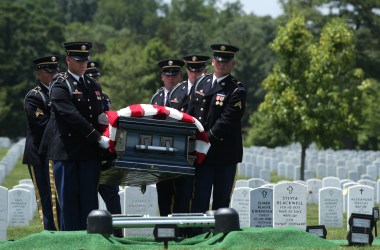
Franklin D. Roosevelt, the president who led the United States into the depths of total war and back out again, has a little-visited memorial on the far side of the Tidal Basin in Washington, D.C. It’s private and reflective, like the man himself, and chiseled into the rough stone are these words, from a Chautauqua speech made three years before the German invasion of Poland: “I have seen war. I have seen war on land and sea. I have seen blood running from the wounded… I have seen the dead in the mud. I have seen cities destroyed… I have seen children starving. I have seen the agony of ... Read More

Accepting a Warming Planet Could Cool Urge To Go To War

Drought land

Climate change has the clear potential to cause conflict, as migrants flee no-longer-habitable areas and nations fight over increasingly scarce natural resources. But newly published research offers a more hopeful scenario. It presents tentative evidence that fears of a warming planet could bring earthlings together in a common cause. “Increased awareness of the shared threat of global climate change can, at least under some circumstances, reduce support for war, and promote efforts at peaceful coexistence and international cooperation,” writes a research team led by psychologist Tom ... Read More

The Many British Invasions

America's reputation is rather poor in many parts of the world, arguably due to our propensity to protect our interests through the use of military might. But while Pakistanis may be shaking their fists at our drones, it appears that, when it comes to imposing our will via force, we have nothing on the Brits. "British have invaded nine out of ten countries" reads the headline on a story in the London Daily Telegraph, posted online over the weekend. It reports that a new analysis of "the histories of the almost 200 countries in the world found only 22 which have never experienced an invasion ... Read More

An Emmy for ‘Where Soldiers Come From’

Last November, we alerted you to keep an eye out for “Where Soldiers Come From,” a superb documentary that was about to make its broadcast debut on PBS.  Heather Courtney’s film follows four friends from Michigan’s Upper Peninsula as they enlist in the National Guard, endure a harrowing stint in Afghanistan, and deal with a variety of challenges as they readjust to civilian life. We’re happy to report that, earlier this month, the film was awarded a well-deserved News and Documentary Emmy in the category “Outstanding Continuing Coverage of a News Story, Long Form.” It is ... Read More

The Wars That Really Ended All Wars

shutterstock_3201638(1)

“Only the dead have seen the end of war,” philosopher George Santayana wrote in 1905. We may be living in the most peaceful epoch of human history, as Harvard psychologist Steven Pinker has argued, free from the quotidian violence of pre-modern society, but the road to pacifism is incomplete. No one has traveled this road faster than the Enga of Papua New Guinea. An isolated population of subsistence growers and pig farmers living in the island’s mountainous interior, the Enga made the transition from simple, tribal society to mechanized warfare in the space of 70 years. And now, ... Read More

‘Where Soldiers Come From’ Returns

Republican presidential candidate Mitt Romney was widely criticized for not mentioning the sacrifices of American troops during his acceptance speech. But the truth is that, barring some major battle that makes the news, few of us pay much thought to these brave young men and women. What drives them to enlist? How are they changed by their experience? What problems do they face upon returning home? Surely we owe them enough to care. One group of such soldiers is the focus of the superb documentary Where Soldiers Come From. First shown on PBS one year ago, it is being rebroadcast on many ... Read More

Ultimate Weapon: Knowing a War Zone’s Culture

When U.S. soldiers first went into Afghanistan and Iraq a decade ago, the military gave little thought to how an understanding of regional language, values, and norms could ease the interaction between troops and the locals they encountered. “There was this early period there when we invaded Iraq, in particular, where we just thought that this was a military endeavor,” said Rochelle Davis, an assistant professor of anthropology at Georgetown University and a fellow at the Woodrow Wilson Center. “If you go back and look at how we talked about it and the things we did, culture just ... Read More

Public Feels Military’s Pain But Won’t Share It

Americans for generations have fretted over the relationship between the military and civilian society, over how the one institution fits within the other, how the broader population receives and perceives its soldiers. But as the U.S. approaches the 10th anniversary of the launch of the war in Afghanistan this week, this much is novel: The longest war in U.S. history is being fought by the smallest percentage of its population. The resulting implications — which Jeff Shear touched on for Miller-McCune.com earlier this year — are unsettling. As these wars have moved off of the front ... Read More

No Way Out: Exiting Afghanistan and Iraq

On Oct. 7, 2001, U.S. forces launched an offensive in Afghanistan with the aim of dismantling the al-Qaeda terror network and driving the radical Islamist Taliban government from power. That was a decade ago, and the war goes on. Today, the U.S. finds itself facing a clear but intractable question: How do we end wars? As the “long wars” of Afghanistan and Iraq rumble on, the answer becomes more elusive and more vague. In an August 2010 speech, President Obama described how the world had entered a new era, “an age without surrender ceremonies.” Perhaps Obama remembered that ... Read More