Pacific Standard July-August 2013 Cover

People Develop, Not Places

people-develop

"People Develop, Not Places" is an odd tagline for a geographer. I picked it up from economist Michael Clemens. Place-centric thinking hinders economic development policy. Clemens and Lant Pritchett tackle this problem, recommending replacing "income per resident" with "income per natural": If we interpret income per capita to indicate material welfare, this is unsatisfactory. While production has a place, people, not patches of Earth, have well-being. The focus on income per resident has rested more on the spread and use of national accounts data and on statistical cost and convenience ... Read More

Is California About to Embark on a Gigantic New Experiment in Public Education?

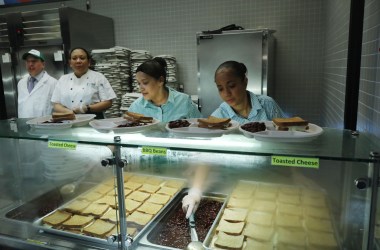
belmont-high

The most compelling debate in the global poverty world over the past several years has revolved around whether simply transferring cash to the needy, without conditions, works better than delivering aid through some complicated development scheme. Global charities like GiveDirectly operate on this unconditional cash transfer model. New research out of Uganda shows that poor young people given a year’s salary (around $382), no strings attached, experienced substantial long-term benefits, using the money to help lift them out of poverty and stay there. The return on this investment was ... Read More

Are Babies Healthier in North Korea or Northeast Ohio?

infant-mortality

Infant mortality within a three-mile radius around one of the nation’s best children’s hospitals, in Cleveland, Ohio, is worse than that in some third-world countries, Dr. Michele Walsh, neonatology director of Rainbow Babies & Children’s Hospital, claimed in a radio interview last week. The hospital anchors the relatively affluent University Circle neighborhood, home to Case Western Reserve University, on the east end of an otherwise pretty impoverished city. (Seventy percent of the infants that enter Walsh’s intensive care unit are on Medicaid.) Infant mortality rates higher ... Read More

Latin America is Increasingly Middle Class

A few hours ago, the UN's Economic Commission for Latin America and the Caribbean (ECLAC) issued the encouraging news that Latin America is getting more middle class. The agency's researchers found that the continent has fewer people in poverty today than at any point in the last three decades. That's according to the agency's annual study, "Social Panorama of Latin America." The whole report is available as a free download here. The evidence points to one main factor, apparently: better jobs. A million fewer people are in poverty in Latin America than were last year, and that is because ... Read More

Things We Know That Aren’t True, Poverty and Terrorism Edition

You might think that poverty breeds terrorism. It's a fairly intuitive view, and it has been trumpeted by some major figures. Here's Archbishop Desmond Tutu, for instance: “You can never win a war against terror as long as there are conditions in the world that make people desperate — poverty, disease, ignorance.” And here's Colin Powell: “We can’t just stop with a single terrorist or a single terrorist organization; we have to go and root out the whole system. We have to go after poverty.” God knows, there are far, far worse outlets for the energy that has hummed and ... Read More

China’s Urban Immigrants: A Diet of Bitterness

Westerners visiting China for the first time often seem surprised at the country’s relative lack of poverty. Chinese cities do not have beggar populations on the scale of India’s, nor are conditions in their shantytowns as dire as those in the favelas of Brazil. While the country’s much-touted economic growth has clearly not been distributed equally, a quick visit to any Chinese metropolis leaves the impression that poverty is less of a concern there than in many other places around the world. But venturing into the countryside, particularly in China’s west, reveals a different ... Read More

What Happens to All Those Hotel Soap Bars?

In 1994, on his second trip to the United States, Derreck Kayongo was staying at a Philadelphia hotel when he noticed that every bar of soap he’d use in the morning was replaced magically with a new one by the time he returned that evening. “I asked the concierge what they did with the partially used bars, and he actually told me they threw them away!” Though Kayongo grew up in a well-to-do family — his father, in fact, owned a soap factory in Uganda — the 42-year-old Ugandan native ended up living as a refugee with his family in Kenya after Idi Amin came to power. “That was the ... Read More

Library Parks Foster Community in Colombia

Three teenagers are break-dancing in the courtyard of a government building in Medellín, Colombia. A boom box blares hip-hop — pure bass against the concrete walls. A dozen other teens sit cross-legged or lean against backpacks. Johana Pabon stands near the building’s glass entryway staring at the break-dancers, arms crossed, hips thrust sideways, eyes narrowed. Her tight smile, though, shows unmistakable pride. “They have this space,” she says. “They can use it whenever they want.” Pabon is a docent at the Parque Biblioteca San Javier, which opened in 2006 — one of nine ... Read More

Neglected Tropical Diseases Neglected No More?

Even after centuries, it’s hard getting noticed. While they don’t have the name recognition of an epidemic like AIDS (or the Bono star power), neglected tropical diseases, some of which have been around since at least 600 B.C., are the most common serious maladies for the 2.7 billion people on earth who live on less then $2 per day. On January 30 in London, more than a dozen pharmaceutical companies, the governments of the U.S., United Kingdom, and United Arab Emirates, the Bill and Melinda Gates Foundation, the World Bank, and others announced a coordinated push to wipe out or control ... Read More

One Laptop Per Child Redux

The New York Times called it,  “The Laptop That Will Save the World,” while the renowned Computer Graphics Laboratory at Stanford University  referred to it as “a monumental feat of engineering and design.” Dressed up like a toy in a Kermit-the-Frog green and white plastic shell, this durable little computer was the progeny of the nonprofit organization, One Laptop Per Child. When the laptops went into mass production in November 2007, OLPC’s ambitious plan aimed to place a free computer into the hands of the world's 1 billion impoverished children. Education is the exit ramp ... Read More