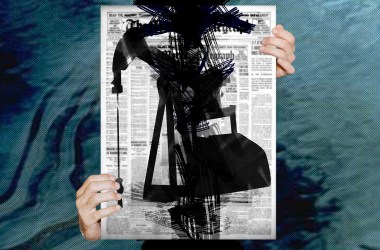


Pacific Standard July-August 2013 Cover

Go Ahead, Mess With Texas

texas-flag

A study by Austin's Strauss Institute for Civic Life has found Texans to be the least-involved citizens in America. Called the Texas Civic Health Index, the study (PDF) used census data to look at voter participation in the 2010 midterm elections and additional research on how Texans interact with each other outside of politics. The researchers found that just under 62 percent of Texans were registered to vote in 2010, while the national average was 65 percent. And that number of registered Texans is down from 2008 when it was just over 68 percent. Voter turnout in Texas, which hovers ... Read More

10 Fascinating Things About State Politics You Probably Didn’t Know

illinois-capitol

I just came back from the 13th annual State Politics and Policy Conference, held this year in Iowa City, Iowa. I’m a big fan of this conference—it reliably features really innovative work on state politics, which unfortunately rarely gets a lot of national (or international) attention. The lessons we glean from state politics are actually incredibly valuable for people concerned with American politics. The U.S. state political systems are all largely based on the federal government, but they feature interesting variations and quirks that offer useful lessons about things like governing ... Read More

Trying to Fix Broken Economics

broken-economics

Here is a list of economic questions that have something in common. In a recession, should governments reduce budget deficits or increase them? Do zero percent interest rates stimulate economic recovery or suppress it? Should welfare benefits be maintained or cut in response to high unemployment? Should depositors in failed banks be protected or suffer big losses? Does income inequality damage or encourage economic growth? Will market forces create environmental disasters or avert them? Is government support necessary for technological progress or stifling to innovation? What these ... Read More

The Great White Hoax

Chael-Sonnen

Chael Sonnen spent most of his fighting career as a marginally above average fighter with a bombastic personality and tragicomic penchant for losing big fights in the most embarrassing fashion possible. However, thanks to a depleted pool of contenders in the UFC’s middleweight division and some well-timed wins, he earned a shot at reigning champion and pound-for-pound kingpin Anderson Silva that was scheduled for August of 2010. What followed was straight out of a certain political strategist’s playbook. In the lead up to the fight, Sonnen claimed that Portuguese, Silva’s native ... Read More

The Strange Game Theory of the Sequester

Capitol Building

Barring the biggest Washington miracle since Dolly Madison ferreted paintings out of a burning White House in 1812, sequestration—the automatic, across-the-board cuts to defense, discretionary and certain health programs totaling $85 billion in the 2013 fiscal year, and $1.176 trillion over the next decade—will take effect March 1. The Congressional Budget Office has estimated that these cuts will cost 750,000 jobs in 2013, and reduce gross domestic product for 2013 by up to 0.5%. The effects stand to be disastrous: that much is clear. But when it comes to the politics of the ... Read More

How Much Does Ideology Matter in Elections?

(PHOTO: LABELMAN/SHUTTERSTOCK)

Just how much does ideology matter in an election? In a recent article in Commentary, Michael Gerson and Peter Wehner argue that it matters a lot, to the point where it cost Mitt Romney the presidency: By all rights, Barack Obama should have lost the 2012 election. The economy during his first term in office was weak from beginning to end. Growth was anemic when not utterly static, unemployment was persistently high, and, as recently as last year, an overwhelming majority of Americans still believed we were in a recession. The signature legislative achievements of the president’s first ... Read More

Red Science, Blue Science

redsciencebooks

The Republican Brain: The Science of Why They Deny Science—and Reality By Chris Mooney; (Wiley) Science Left Behind: Feel-Good Fantasies and the Rise of the Scientific Left By Alex Berezow and Hank Campbell; (PublicAffairs) TIMES OF INTENSE IDEOLOGICAL POLARIZATION are always dreary for reasonable people. Consider the Marquis de Condorcet, a brilliant scientist, mathematician, and political philosopher who was forced into hiding during the French Revolution after running afoul of the radical followers of Robespierre. During his months as a fugitive, Condorcet penned a ... Read More

On Moral Values, Liberals More Prone to Stereotype Than Conservatives

A protester Santa Barbara, California in 2007 (PHOTO: SHUTTERSTOCK)

Those conservatives are appalling: They couldn’t care less if people get hurt. And liberals? They think anything goes, and have no concept of the meaning of loyalty. Caricatures? Absolutely. But such stereotypes are widely held among Americans, newly published research confirms, with liberals particularly clueless about the concerns of conservatives. Regarding issues of morality, “people overestimate how dramatically liberals and conservatives differ,” psychologists Jesse Graham, Brian Nosek and Jonathan Haidt write in the online journal PLoS One. Specifically, their research ... Read More

Fiscal Cliff Round-Up

John Dickerson has a fine piece up at Slate that separates  the signal from the noise on the “Fiscal Cliff”. He points out that nothing Saxby Chambliss or any other Senator or White House official says means much, and that House Republicans are the only voice that matters right now. Obama has previously offered to make spending changes to Social Security and Medicare and has more recently made a very concrete revenue offer: Let the Bush tax cuts expire for the wealthiest Americans. So it might be safe to say that the only question is whether House Republicans will give on this revenue ... Read More

Twenty Himalayans Have Set Themselves On Fire This Month

It's hard to mistake a Himalayan November for spring. Frustation in the Chinese-run region of Tibet appears to be making a democracy push this month anyway. It's not clear if it's a series of individual acts, or something organized, but in just the past week five people have set themselves on fire in Tibet, for a total of 20 just this month, most in small if dramatic, deadly demonstrations. The suicides recall a series of similar immolations in Tunisia, which set off the then-called Arab Spring. Multiple reports, most of them regional, note that 81 Tibetans have taken the extreme step of ... Read More