

Browsing Tag
Online
28 posts

How Do You Make a Living, Video Therapist?
Noah Davis talks to Vanessa Marin about writing as branding and why her model works.
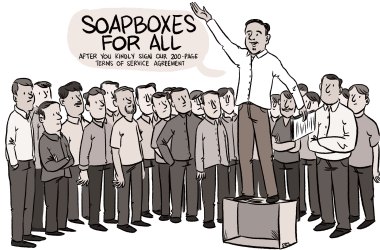
No, You Don’t Have Free Speech Online
We treat platforms like they are public utilities. They’re not—but maybe they could be.

Can Digital Vigilantism Make the Internet Safer for Women?
Curt Schilling's war against Internet trolls follows a distinctly American tradition of justice. Namely, it's about more than just vengeance.

Mounting a Critique of Online Identity, in Person
Physically co-present with the sociologist Nathan Jurgenson during a break from his battle to dismantle the artificial barrier we’ve raised between life online and in the outside world.

American Shopping Malls Are Still Disappearing
Shopping malls are shuttering their doors at a rapid rate. Is there any hope on the horizon?

Here’s One Unexpected Way to Land on the NSA’s Watch List
If you downloaded the privacy software Tor in 2011, you may have been flagged to be spied on.

The Searchers: Amateur Web Sleuths Are Teaming Up to Solve Cold Cases Online
An old American obsession—the rogue detective's urge to crack the case—finds a new outlet.

Can Memes Exist Outside of the Internet?
A number of advertisers have tried to pull Internet Culture off the Web and put it onto your television screen.

How to Block Online Tracking
Many companies track your behavior and request information about you without explicitly asking for your permission. Here’s how to combat the trackers.