Pacific Standard March-April 2013 Cover

The Deluge Continues

great-rift-valley

East Africa’s largest economy is about to become a major oil producer, according to Bloomberg BusinessWeek. The U.K. oil giant Tullow estimates that Kenya’s Great Rift Valley area—known as the "Cradle of Mankind" due to the discovery there of the earliest known human remains—could yield 10 billion barrels of oil, enough to supply the country for three centuries. Production remains years away; officials first hope to build a $5 billion network of pipelines to the nation’s Indian Ocean coast in order to facilitate shipping to, notably, China, India, and other Asian countries. With ... Read More

The Energy Debate We Aren’t Having

Anti-fracking activists hold a rally outside a Democratic Party policy summit in New York in August 2012 to express their opposition to fracking to Governor Andrew Cuomo. (PHOTO: ALLAN TANNENBAUM/NEWSCOM)

BY RIGHTS, the events of 2012 should not have happened: for the seventh straight year Americans reduced their oil consumption, while for the first year since 1859, the U.S. increased oil production by more than 800,000 barrels a day. For 40 years Americans have fretted about our increasing thirst for oil, declining production, and consequent reliance on oil imports. Suddenly all that has been reversed. Inspired by high fuel prices for oil and gas, and new applications of fracking, (see “The Deluge” ) a drilling boom spans the country. Last year was really a dual victory: for ... Read More

The Deluge

(PHOTO: CHRISTOPH MORLINGHAUS)

OIL SEEPING TO THE SURFACE of the lazy Kern River, just north of Bakersfield, California, first caught James Elwood’s attention in 1899. The state was in the midst of an oil boom, and Elwood wanted in on the action. He rounded up a few relatives, got some picks and shovels, chose a patch of sun-baked earth near the river seep, and started digging. Forty-odd feet down, they switched to an auger, and punched down another couple of dozen feet. Oil—trapped in the stone’s pores for millions of years—began oozing into the crude well. The strike made the front page of the local ... Read More

Air Boomtown

(PHOTO: RENAE MITCHELL)

At the end of this summer, as I’ve done most summers for the past 25 years, I copiloted a small plane and landed at Sloulin Field International Airport in Williston, North Dakota. Sloulin Field is hunkered not far from the arid, windswept eastern border of Montana, and about 60 miles south of the Canadian border. It’s the first opportunity to clear U.S. customs following my annual family fishing trip to northern Saskatchewan. The previous summer, only the wind and the lilting song of meadowlarks disturbed the little airport’s tranquility. This year, Williston’s tarmac reverberated with ... Read More

Why Can’t Obama Articulate His Energy Strategy?

energysources

When President Obama says his energy strategy is “all of the above,” I cringe. The statement is hardly inaccurate: pushing every kind of energy from nuclear to natural gas and oil to solar, wind, energy efficiency, and grid upgrades is exactly what he’s done during his term. What I dislike is that the president is missing an opportunity to tie all the stuff he’s doing into a grander strategy to decrease carbon emissions, give Americans control over their energy spending, and sustain long-term economic growth. “All of the above,” is using a lame-ish crutch where Obama could be ... Read More

Maybe A Little Less Dictatorship In Our Tanks

Here’s a seemingly obscure bureaucratic decision that could have big moral implications. Yesterday the SEC (Securities Exchange Commission) released a long awaited (or delayed) decision saying publicly traded oil companies must reveal their spending on foreign projects, forbidding some of the secrecy that has fostered the corruption and undemocratic governments that plague oil producing countries.  For a breakdown of the issues, see this article from the Houston Chronicle, which mentions that the SEC believes that the oil companies will spend $1 billion complying the first year and hundreds ... Read More

Surfers and Fracking

Surfer Chadd Konig first gained national attention when he paddled 315 miles from Santa Barbara, California to Mexico to raise awareness about a proposed development project west of Goleta, California.  Now he’s set his sights on fracking. Two days ago he completed a paddle of the 300 miles of sharky coastline between Santa Cruz and Santa Barbara. Check out photos of the trip here. The Environmental Defense Center, a nonprofit based in Central California, writes on its website that, “In early May, 2011…it was discovered that Venoco, Inc. had hydraulically fractured two oil wells ... Read More

Gulf Coast Oil Platforms: Save the Rigs?

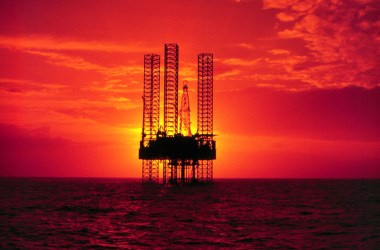
Oil rig at sunset

This year, it's likely more than 100 offshore structures in the Gulf of Mexico will be removed as part of a Department of the Interior plan. There are 650 nonproducing oil and gas platforms, known in the industry as “idle iron,” listed for removal “as soon as possible”—i.e. within five years of the end of production or a year of losing the lease—under Interior’s directive. Historically, companies seldom removed an idle structure until the lease for the area where it was located expired. Having companies clean up after themselves sounds like a good idea, but many ... Read More

Steve Coll’s Choppy Portrait of ExxonMobil

Private Empire

Private Empire is an important contribution to the ongoing debate about our energy future. For his new book being released this week, Pulitzer Prize-winning journalist Steve Coll culled data from more than 400 interviews, numerous court cases, and government records to construct a series of engaging and informative snapshots of ExxonMobil, the largest and most profitable private oil company in the world. Coll begins with the Exxon Valdez oil spill in 1989 and takes readers all the way up to the company’s announcement of record profits in 2011. He focuses on ExxonMobil’s efforts to ... Read More

Burning Ice: The Next Energy Boom?

Set a lighter to an icy block of methane hydrate, a naturally frozen combo of methane gas and water, and flames spew forth at random. However unlikely this fluke of nature may appear — burning ice — it could hold the keys to a vast wealth of untapped, clean-burning methane gas thought to exist deep beneath the outer margins of most continental shelves. Its contribution may be peripheral to the immediate needs of Western Europe and North America, currently drowning in cheap natural gas, but it present a potential lifeline to resource-poor nations like Japan, which already imports more ... Read More