
Pacific Standard May-June 2013 Cover

Study: More Black Juveniles Sentenced to Life Without Parole

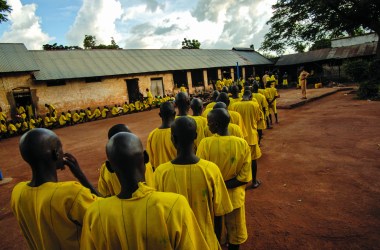
Three weeks before the U.S. Supreme Court hears arguments on the constitutionality of sentencing juveniles convicted of homicide to life without parole, the first-ever study of youngsters serving these punishments has been released. The Lives of Juvenile Lifers, a survey of more than 1,500 prisoners who were sentenced prison terms of life without parole (known as JLWOP) when they were between the ages 13 to 17 was compiled by The Sentencing Project, an advocacy group for sentencing reform that opposes JLWOP. “Although it does not excuse their crimes,” the report sums up, “most people ... Read More

David Onek — Law Enforcement Facilitator

David Onek

Improving the juvenile justice system has been the focus of David Onek's professional life for some 20 years. He uses an innovative approach that might seem obvious but has been underutilized: He gets everyone in the field talking to each other. Onek's experience in influential policy, governmental and academic positions in the San Francisco Bay Area has led him to believe that because of sharp disagreements dividing them, law enforcement officers, members of community groups, prisoners and corrections officers are unable to bridge much smaller gaps on many issues — or even to realize how ... Read More

Should Minors Ever Face Life Without Parole?

The Supreme Court's 2005 decision in Roper v. Simmons struck down the death penalty for juveniles, citing the Eighth Amendment's prohibition against cruel and unusual punishment. But that left another possible Eighth Amendment issue on the table: whether sentences of life without parole for juveniles are constitutional. That question is now being considered on both the judicial and legislative levels. In the term beginning this October, the Supremes will hear two cases — one involving a 13-year-old sex offender, the other a 17-year-old probation violator present when a felony murder ... Read More

Jury Out on Girls-Only Juvie Programs

Girls now account for nearly one-third of all juvenile arrests, and the overwhelming majority of these female adolescents have mental health and substance abuse problems. Girls are also arrested for violent crime less frequently than boys, but even though juvenile arrests for crimes against the person have been dropping in recent years, they are falling at a much slower rate for girls. In one category, simple assault, they have actually increased by nearly a quarter. These figures are alarming enough that there has been an emphasis on gender-specific programs since at least the 1992 renewal ... Read More

Juvenile Justice and the Theater of the Absurd

In the diner where my working life began hung a photocopied epigram, splattered with coffee and grease: "The beatings will continue until morale improves." We all get the joke: The supervisor is committed to doing the absolute wrong thing until his charges cheer up and give him the right result. The premise is absurd, a Samuel Beckett play in a single sentence. It's quite a funny play, too — unless you happen to be the one getting beaten. The executive personnel of this establishment changed frequently; most had never managed employees before, and some reacted to their insecurity by ... Read More

Bullying: A Junior Hate Crime?

In American schools, bullying is often as common as pop quizzes and uncomfortable plastic chairs. Yet seemingly harmless, juvenile taunts may lead to anxiety and depression, drug use or even violence. A growing body of research seeks to help school administrators understand and curb bullying on school grounds — the hub of social interaction for most American children and, consequently, the center of bullying behavior. In the October issue of American Behavioral Scientist, Bridgewater State College professor Elizabeth Englander suggests a novel approach: Prevention programs could treat ... Read More