
Pacific Standard July-August 2013 Cover

Cloudy With No Chance of Normal

worried businessman facing the sea

LARRY SUMMERS MAY BE OUT of the White House, but he is still a remarkable bellwether of establishment economic thinking. As the Treasury secretary under President Clinton, he was a stalwart of fiscal discipline and financial deregulation; as the director of President Obama’s National Economic Council through 2010, he was a brake on big stimulus proposals. Now, in these days of worldwide fiscal austerity, he has reinvented himself, in lectures, on television, and in the press, as a pro-growth moderate. In an essay published in the Financial Times last March, for example, he warned against the ... Read More

Cities are (Still) Dropping Like Flies

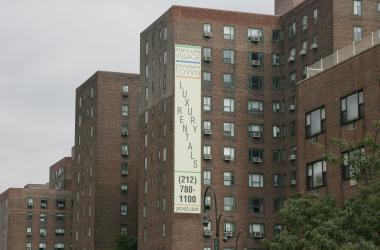
(PHOTO: INMAN NEWS)

Cities are dropping like flies. In the last several months, a string of municipal governments in states from Alabama to Rhode Island have filed for bankruptcy. Even more are likely to follow within the next year as cities reel from an end to federal stimulus dollars. What’s going on with local governments? Their troubles stem from multiple sources, but the critical factor is, yes, after all this time, still the housing bust. City finances are almost exclusively tied to property tax revenue—indeed, most locales have no other funding source. Despite all the focus on mismanagement and ... Read More

Hunting for Bear (Stearns) With the Martin Act

Today’s announcement by the elegantly named Residential Mortgage-Backed Securities Working Group that it was suing over fraud allegedly perpetrated by the late, if unlamented, Bear Stearns notes that the group’s weapon of choice is the Martin Act. Faithful readers may recall that the act is not a federal law but a New York state law enacted in 1921 to crack down on “blue-sky” stock manipulators, i.e. pump-and-dumpsters whose equities were backed by nothing more than the open air. (Geez, at least today’s abusers of collateralized debt obligations had a horrible, but genuine, credit ... Read More

Angry Spanish Now Dancing in Bank Lobbies, Are Good At It

http://www.youtube.com/watch?v=iop2b3oq1O0 Since last spring, a Seville-based performance group calling itself Flo6x8 has been sending trained dancers into the lobbies of bank branches across crisis-wracked Spain and disrupting business. The group first gained attention last May when it staged a pretty decent flamenco in a branch of Bankia, one of Spain's largest banks and the current target of corruption investigations. Bankia, which is broke, rose 24 percent yesterday on reports that it would receive a 30 billion Euro (US $36.9 billion) bailout from the EU's crisis lending body. In the ... Read More

The Restructuring of Capitalism in Our Time

The Restructuring of Capitalism in Our Time

This book wasn’t yet published when the Occupy Wall Street protests got under way, but The Restructuring of Capitalism in Our Time provides a solid foundation for that movement’s critique of the financiers who brought the global economy to the edge of collapse. William Tabb, professor emeritus of economics, political science, and sociology at the City University of New York, challenges those who claim that the 2008 meltdown was some kind of weird accident that could not have been anticipated. He sees the crisis as a logical consequence of policy shifts dating back to the early 1980s that ... Read More

Credit, the Recession’s Culprit

The more leveraged they come, the harder they fall. A new analysis from the Federal Reserve of San Francisco argues that the severity of the recession and the uneven pace of recovery has more to do with the amount of credit accumulated pre-recession over other factors. The paper, by Fed researcher Oscar Jorda, points out that the higher a country’s ratios of private lending to GDP, and the larger its financial sector, the slower employment and investment have recovered. Jorda looked at 140 years of data in 14 advanced economies and concluded: "Countries that experienced the ... Read More

Unleashing a Wall Street Watchdog

ps-martin-act

No one doubts that the Great Recession has been the worst economic crisis in this country since the Great Depression. By whatever yardstick — the near collapse of the banking system, the 8.8 million jobs lost between 2008 and 2010 — no downturn in the intervening 80 years comes close. The crisis has forced a fundamental rethinking of the financial system, a conversation that is now centered on the 2010 reforms known as the Dodd-Frank Act. But the 2,319 pages of legislation do not hold all of the answers. If the regulators who are responsible for enforcing the hundreds of new rules are not ... Read More

Housing Crisis Hits Poor Renters Hard

Affordable and Available Units per 100 ELI Renter Households

Since the American housing crisis began five years ago, policymakers have devoted the bulk of their attention to the bubble’s most visible victims, homeowners who’ve lost their houses to foreclosure, or who look like they may any day now. This group has been the subject of congressional inquiries and legal settlements and numerous election-year speeches. Just this week, California’s attorney general has been pushing Fannie Mae and Freddie Mac to forgive some of the debt owed by underwater homeowners. Considerably less attention has gone to a population deeply impacted by the housing ... Read More

Can a Bad Economy Save Your Marriage?

Lisa Diamond is one of the few people who has something positive to say about the economy. Sure, a wide range of problems can be attributed to the continuing recession, the University of Utah psychologist concedes — but from her perspective, that’s a good thing. Diamond, whose research focuses on personal relationships, reports financially squeezed spouses who blame the economy for their woes, rather than pointing the finger at their partner, are more likely to be satisfied with their marriages. She discussed her findings, which were published in the journal Personal Relationships, with ... Read More

How Foreclosures Feasted on Some Cities, Not Others

Here’s a tale of two cities in Southern California, one that survived the worst of the foreclosure crisis with a few scratches, and one that was badly beaten up. In 2000, Santa Paula, a historic oil town bounded by vast greenbelts of orange, lemon, and avocado groves, had a population of 29,000 and a median household income of $42,000. When the subprime mortgage industry collapsed eight years later, 16 of every 1,000 homes in the “Citrus Capital of the World” went into foreclosure, well below the national average of 22 for every 1,000 homes. Another old town, Lake Elsinore, closely ... Read More