
Pacific Standard July-August 2013 Cover

Farmers Don’t Make Money From Farming

farm

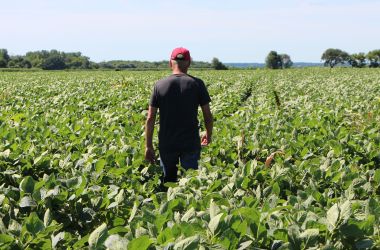
It probably would not surprise you to hear that most profitable American farms are large industrialized operations. That's just how things work now. But it might surprise you to find out that an overwhelming majority of farmers—based on the definition of the word—are not part of those big-industry outfits. Most American farms are tiny. And nearly all tiny American farms lose money. From the latest USDA report: Despite high prices for many crops, 2012 was no exception, with median farm income projected to be -$2,799. Most farm households earn all of their income from off-farm ... Read More

Just Planting Trees Won’t Stop March of Deserts

USDA map of world desertification

Attendance was sparse at a press conference following last fall’s first ever U.N. General Assembly devoted to desertification, as the loss of fertile land in dry areas is known. “If this were about climate change, the room would be full,” Luc Gnacadja of Benin, executive secretary of the United Nations Convention to Combat Desertification, began his remarks to the press. On the 20th anniversary of the 1992 United Nations Conference on Environment and Development, where the desertification convention was established, it remains a poor cousin to other groundbreaking treaties set up at ... Read More

California Farms Get Testy Over Water Quality

The world’s most pervasive groundwater pollution problem – nitrate in drinking water – is under scrutiny in the richest farming region of the United States. This week, a report for the California Legislature revealed that 250,000 people living in Central California, including four of the top five agricultural counties in the U.S., are currently at risk for nitrate contamination in their drinking water. Many of them are among the poorest Californians. Nitrate, in this instance, is a byproduct of nitrogen fertilizer. In drinking water, high concentrations of it can interfere with the ... Read More

How Norman Borlaug Went With the Grain

By the end of October 2011, the Earth’s human population had reached 7 billion. It was half that in 1968 when Stanford professor Paul Ehrlich published The Population Bomb. In the book’s opening pages he proclaimed that too many people in the planet’s underdeveloped countries made mass starvation inevitable, that a minimum of 10 million people — “most of them children” — would starve to death every year in the 1970s, and that it was too late to do anything about it. Plenty of experts agreed with Ehrlich; the press ran with the story, it was apocalypse now. Except he was wrong: ... Read More

Insuring Livestock in Kenya, Via Satellite

Brenda Wandera’s iPhone buzzes in her lap. A text message has made its way through the blurry heat of Kenya’s Chalbi Desert, and it changes her next move. “As soon as we get to Kalacha, we have to go to Network,” she says. Go to Network, I wonder. That must be a Kenyan turn of phrase for “finding a cell tower.” I’ve been warned that Kalacha is off the grid, which would make it one of the more remote corners of Africa, where mobile-phone and Internet service in even far-flung villages can be stronger and more regular than in parts of the American Southwest or Appalachia. ... Read More

U.S. Planting Seeds of Peace in Afghanistan

Samuel Rance speaks with a twang and his favorite band is Tool. One morning last spring, he was sitting at a picnic table on Forward Operating Base Salerno in eastern Afghanistan, seven months into his deployment. His team had just finished Operation Thrasher, a training class in composting for farmers in the nearby city of Khost. Behind him were several acres of wheat and fruit trees, and a greenhouse. He and his team members — the Indiana National Guard’s 3-19th Agribusiness Development Team — had planted the grain and the trees, and built the greenhouse. Beyond the farm were the ... Read More

Returning Warriors Go to Work, in the Fields

At age 25, Marine Sgt. Colin Archipley had completed three tours in Iraq. “My unit was redeploying,” he says. “A lot of the guys I served with were going back because they couldn’t find jobs; I worried it would be hard to find something after I separated from the military and thought about going with them.” His wife Karen convinced her husband to trade his tank for a tractor and turn a 5-acre plot they’d bought near San Diego into a small-scale organic farm. A year later, in 2007, Karen and Colin had launched Archi’s Acres, growing basil, avocados, lemons, kale, chard, and ... Read More

New Zealand Imports Foreign Workers: Dung Beetles

New Zealand farmers Dean and Marjorie Blythen are poised for an unlikely spot in the history books — early next year their property, about 30 miles north of Auckland, will become home to the country's first officially imported dung beetles. In what will be the start of a nationwide rollout of the industrious little insects, Blythen expects his 200 Hereford cattle and between 500 and 600 sheep to be joined by perhaps 1,000 to 2,000 beetles at an initial release site on the farm. Those beetles, among 11 species being imported from South Africa, Australia, France, and Spain, are currently ... Read More

Humankind’s Ascent Took Path of Yeast Resistance

Once upon a time there were no farms. People ate fruit off the vine and killed animals as they ran. They roasted things when it suited them but just as often ate them raw. The world was like this for thousands of years, a place of arrows and nuts where everything that was necessary could be found. One might imagine many reasons for giving up on those old, superficially idyllic, ways. Perhaps it was hunger, that ultimate mother of invention, or maybe it was just invention itself, unmotivated by need. But these are not the only options. Solomon H. Katz at the University of Pennsylvania thinks ... Read More

The Farm School: Growing Organic Farmers

No one arrives at The Farm School by accident, because it's not around the corner from, or on the way to, much of anything. You drive increasingly narrow, winding and erratically paved roads through the Berkshire Mountains of western Massachusetts until the only signs are historical markers for battles that old Yankees fought against the British or Native Americans. But Emily DeFeo knows exactly where The Farm School is. "Over the rainbow," she says with a gentle smile. DeFeo is one of 14 students paying for the privilege of spending a year living on and working a 183-acre organic farm. ... Read More