Pacific Standard March-April 2013 Cover

The Death-Positive Movement

Caitlin Doughty

At first, it might sound gross or a little bit scary. Ridiculous, even. You wonder if it’s going to hurt. Will it be meaningless? Messy? What if you don’t know what to do—or if it happens too fast or too slow? Relax, man. It’s totally natural. WE ARE ALL GOING TO DIE. Funny how rarely this seems to come up. Imminent death is the only thing you have in common with every single person you meet. And unlike, say, weddings and weather, the subject of mortality is always interesting. Trying to make small talk about death, though? Well, bring it up at your next business lunch and see ... Read More

The Price of Fame for Performers and Athletes: Shorter Lives

obit-photos

Do famous, successful people live longer lives? New research suggests the answer depends upon how they achieved their fame and success. An analysis of 1,000 obituaries from The New York Times finds the average age of death for notable people varies depending upon their occupation. Athletes, performers, and creative types such as writers and artists died younger, on average, while people in business, politics, and the military hung on the longest. “Fame and achievement in performance-related careers may be earned at the cost of a shorter life expectancy,” write Australian researchers ... Read More

What Happens When You Die on the Internet?

google-plus

You exist on the Internet. At least, if you're reading this you almost definitely do. You communicate with people over email. You look at photos of your ex old friends on Facebook. You follow the news, re-post the news, and hit on supermodels after playing basketball well for 15 minutes on Twitter. You maybe don't use Pinterest because you're not a sociopath. And, if not, you still probably type lots words into Google to figure out how to do things away from the computer. But if you exist, you also must die. (I realize there are like 12 of you—along with all the people who can't ... Read More

Commuting to an Early Grave

(PHOTO: EGD/SHUTTERSTOCK)

Got a killer commute? You just may. Thursday in Los Angeles (appropriately), social geographer Erika Sandow presented her latest slice of commuting scholarship, which finds that some workers with long commutes—more than 31 miles (50 kilometers) one way—die sooner than people who live closer to their job. Sandow, with Sweden’s Umeå University, outlined her as-yet-unpublished work during the annual meeting of the Association of American Geographers. There’s already enough academic research on the perils of commuting to fill a minivan, or at least a Mini. Sandow noted existing ... Read More

Solo Rock Stars Die Young

Amy Winehouse (PHOTO: SHUTTERSTOCK)

Do you dream of being a rock star? Do you hope to live a long life? If so, you’d better start prioritizing—or, at the very least, join a band. Because from Elvis Presley to Amy Winehouse, solo pop superstars are disproportionately likely to die young (although not necessarily at age 27). That’s one finding of a study just published in the British journal BMJ Open, which takes a close look at mortality among rock and pop icons of the past half-century. And just like the rest of us, it finds, famous musicians are more likely to die from substance abuse if they had troubled ... Read More

Accepting a Warming Planet Could Cool Urge To Go To War

Drought land

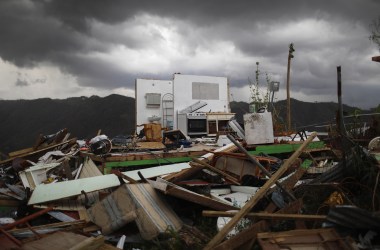
Climate change has the clear potential to cause conflict, as migrants flee no-longer-habitable areas and nations fight over increasingly scarce natural resources. But newly published research offers a more hopeful scenario. It presents tentative evidence that fears of a warming planet could bring earthlings together in a common cause. “Increased awareness of the shared threat of global climate change can, at least under some circumstances, reduce support for war, and promote efforts at peaceful coexistence and international cooperation,” writes a research team led by psychologist Tom ... Read More

The Hardest Conversation: Talking About Death

There is a pandemic in the United States that no single-payer health care system, marvel of modern technology, nor homeopathic tincture can remedy. Medicare doesn’t cover it, and no blockbuster drug will treat it. Call it a “silent crisis.” Symptoms include, chiefly, poor communication between doctor and patient, false hope, and a willingness to move heaven and earth in the final months of life to find a cure where there is none. Prognosis is death without dignity. That life is an ultimately fatal condition is inescapable—death is perhaps the only truly universal human experience. ... Read More

Eastern Philosophy Eases Death Anxiety

Two guys walk into a bar. The bartender greets them with the sad news that a mutual acquaintance—a man of their age and social class—recently keeled over after suffering a massive heart attack. Slightly shaken, they sit down and order drinks. But do they do so with a wistful smile, or a sullen grimace? Do they spend their evening sharing plans for the future, or trading snarky remarks until their unease morphs into anger targeted at some group they don’t like? The answer, according to newly published research, may depend upon whether the watering hole is in Shanghai or Cheyenne. It ... Read More

Do Atheists Have Deathbed Conversions?

Do Atheists Have Deathbed Conversions?

Are there atheists in foxholes? That timeless question (the literal answer to which is yes) is a shorthand way of asking whether, when confronted by their own mortality, even nonbelievers’ thoughts turn to God. Research published earlier this year tentatively concluded that they do. But a new study, conducted by scholars from three countries, reports that death-related thoughts lead us to reaffirm whatever belief system gives our lives meaning—and for atheists, that’s something other than religious faith. “Our tentative conclusion is that even nonreligious people are tempted ... Read More

Nonprofit Helps Duggars Memorialize Lost Daughter

A year and a half ago, Kristin Ohlson told readers of Miller-McCune.com about Now I Lay Me Down to Sleep, a now 6-year-old Colorado nonprofit that takes pictures of babies who have died as a memento for grieving families. While some might see a tasteful picture of a mother holding their deceased child as a touch morbid, others view the black-and-white photos as an important gesture to memorialize a loved member of the family and to help the survivors in grieving. Anthropologist Linda Layne of Rensselaer Polytechnic Institute told Ohlson, “For professional photographers to do that kind of ... Read More