Pacific Standard July-August 2013 Cover

Should Moms Hate Childless Women?

tug-of-war

In a wonderfully provocative article titled “Compulsory Heterosexuality and Lesbian Existence” (PDF), writer and poet Adrienne Rich argues, among other things, that the assumption of heterosexuality in the context of patriarchy alternatively erases and stigmatizes woman-to-woman bonds. Pop culture naturalizes the idea that women should turn to men, and not women, to reinforce their value. Though the title specifies lesbianism, she means intense and meaningful relationships between women more generally. In other words, an overbearing heterosexuality orients women toward men not just as ... Read More

Faith-Based Zucchini

zucchini-flower

I can’t help it: I love science. It’s how I make sense of the universe, how I make decisions when there is so much emotion, so much confusion that surround basic things. Does dairy cause asthma? No, no chance, according to a study by Australia’s Monash Medical School. Does juice contribute to obesity in children? Probably not, according to a study by the University of California-San Francisco. So I let my two small kids have cheese, even when they’re wheezy. And I let them drink juice (but not soda—a study out of Children’s Hospital in Boston (PDF) says that does contribute to ... Read More

When the Kids Aren’t All Right

kids-mental-disorder

Up to 20 percent of children in the United States suffer from a mental disorder, and the number of kids diagnosed with one has been rising for more than a decade, according to a report released by the U.S. Centers for Disease Control and Prevention. In the agency's first-ever study of mental disorders among children aged three to 17, researchers found childhood mental illnesses affect up to one in five kids and cost $247 billion per year in medical bills, special education, and juvenile justice. The most prevalent mental health diagnosis, as reported by parents, was ADHD, which affects 6.8 ... Read More

Why Do We Still Have Summer Vacation?

summer-vacation

Next week begins, in many cases, the three-month period that is summer vacation from school. For those of us long outside of education, and without children of our own, it may be a little hard to recall the sheer joy that is summer vacation. Three whole months outside of the classroom. Your mother surely got annoyed with your sunburns, the fact that you preferred to spend the day playing video games, and your demands to be taken over to your friends’ houses to play, but at least for a few days after school let out in June, did anything on Earth seem better? But if for children those three ... Read More

The Kids Really Are All Right

kids-all-right

Like most parents today I enjoyed far more independence as a child than my children do. I biked to school at eight and roamed the gritty streets of New Haven while not much older. By those standards, my kids live under a kind of house arrest, rarely alone at home, and they're escorted to and from school, sports practice, and pre-arranged, adult-supervised “play dates.” All of which is highly irrational and counterproductive: kids are far safer—even without lock-down parenting—than we think. Hard to believe—with milk cartons and AMBER alerts reminding parents daily of our greatest ... Read More

Why Do Music Students Have Higher SAT Scores?

music

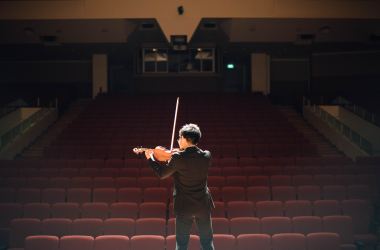
The figures look so good, it’s no wonder that they’re trumpeted by the National Association for Music Education. “On the 2012 SAT,” the organization notes, “students who participated in music scored an average of 31 points above average in reading, 23 points above average in math, and 31 points above average in writing.” A strong argument in favor of music education? Maybe not so much. As we point out regularly here, correlation and causation are very different things. Newly published research concludes those differences reflect the types of kids who decide to participate in ... Read More

What Are the Teens Up to Nowadays?

teens

Teens! We never know what they're doing, do we? (Oh, jeez. Do you #FollowATeen?) Teens are just so mysterious—like those weird deep-sea fish that have flashlights growing from their faces. We know they're fish, but are they really even fish? One day they're watching cartoons and the next day they're playing paddleball behind a school, except the rubber ball they're playing with is filled with drugs and the paddle is actually a stale pancake stolen from a local Denny's. Oh, and they're not actually behind a school; it's a "cyber cafe," probably. The point is: teens are crazy. Teens are ... Read More

Captive Labor Markets and Migration

working-mother

I cultivated an interest in talent migration via human rights advocacy. How could I get American voters to support the ratification of United Nations conventions? I settled on matters of citizenship. Non-citizens didn't enjoy the same constitutional protections as citizens. In fact, I learned that where you are located determines the force of international treaties. Geography and sovereignty impact international human rights law. Places, not people, have rights. Not all migrants fall into legal spatial loopholes such as Guantanamo. Cosmopolities above the fray hop from global city to global ... Read More

How Social Groups Influence Parents’ Decision to Vaccinate

vaccine-photo

The people and information sources parents surround themselves with may influence their choice to vaccinate their children or not, according to a survey from one county in Washington state. Of almost 200 parents who took the survey, almost all said they had groups of people offering advice on vaccination, but those who chose not to fully vaccinate their children were more likely to have larger social groups and to turn to other sources, such as books, pamphlets, and the Internet, for guidance. "The take-home message from this is that the social networks for the majority of parents are ... Read More

Your Child’s Brain on Math

brain-on-math

Parents whose children are struggling with math often view intense tutoring as the best way to help them master crucial skills, but a new study released on Monday suggests that for some kids even that is a lost cause. According to the research, the size of one key brain structure and the connections between it and other regions can help identify the eight- and nine-year-olds who will hardly benefit from one-on-one math instruction. "We could predict how much a child learned from the tutoring based on measures of brain structure and connectivity," said Vinod Menon, a professor of ... Read More