Pacific Standard March-April 2013 Cover

Vanilla Ice

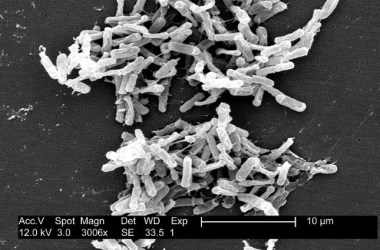
Who hasn’t heard of Vanilla Ice? Adapting the rhythmic underpinnings of the Queen/David Bowie duet "Under Pressure," Mr. Ice created a snappy rap song destined for top 40 success, radio replay — and ultimately into the halls of pop-culture irony. Equipped with its own rat-like flagella, Pseudomonas syringae enters its era of underwhelming appreciation. This gram-negative, rod-shaped bacterium, named after the lilac tree from which it was first isolated, inhabits plant surfaces as a pathogen. Vanilla Ice excretes a protein toxin that causes water to freeze at high temperatures — making ... Read More

The Vibrio Family

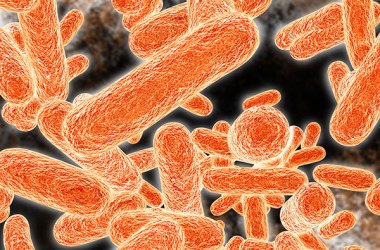
The world is cold, bitter place for the unfortunate few who have not seen Francis Ford Coppola’s Godfather trilogy. Parodies don’t quite make sense; quotations from the film echo in lost cause; and the color orange carries little significance beyond its failure to rhyme with anything. For those who haven’t absorbed the tribulations of the Corleones, we offer a microbial placeholder: the Vibrio family. This gram-negative, rod-shaped bacterium found in sea water carries both a sheathed flagella and a whopping reputation. First isolated from cholera patients, this highly pathogenic ... Read More

The Torpedo

Bell Biv DeVoe, R&B spin-off group from the early 1990s, hit it big with smash single, “Poison.” Chances are that while the group crooned “Girl, I must warn you,” it was unaware of the predatory microbe Bdellovibrio bacteriovorus. This unique genus of gram-negative aerobic bacteria will invade and, in most cases, devour its prey entirely. (Gram-positive bacteria — named for the test that identified them — feature a thick cellular wall of protein and sugar compounds that helps store energy and provides structural strength.) Found in ocean and fresh water, sewage, soil and ... Read More

Slick Willy

Ads for commercial cleansers portray bacteria as ominous globs lingering in the darkened corners of our homes. Yet some strains of bacteria actually aid in greening our environment. “Slick Willy,” or Pseudomonas putida, are gram-negative, rod-shaped bacterium that play a role in decomposition. Bioengineered by professor Ananda M. Chakrabarty in 1971, P. putida was the first patented organism in the world. Coveted for its diverse metabolism — including the ability to break down organic solvents like toluene, benzene and ethylbenzene — Pseudomonas is used in bioremediation, fuel ... Read More

Cyano de Bergerac

"Both genius and monster, unique, unexplainable. He has every quirk and every virtue obtainable" mused Ragueneau in Edmond Rostand's bio-play, Cyrano de Bergerac. Though the play is built around the life events of a French dramatist and duelist, this poetic descriptor easily applies to the relentlessly ostentatious Cyrano of our microbial world, Cyanobacteria. As resilient and artistic as its namesake, Cyano sustains life in high temperature, geothermal environments where it produces some of the brightest colors in nature, like those found at the Grand Prismatic Spring in Yellowstone ... Read More

Space-Age Conan the Bacterium

In 1956, professor Arthur W. Anderson experimented with food sterilization by dousing canned meat with large quantities of gamma radiation. Despite an unusually high dosage, a potent microbe killer, the the canned meat still spoiled. The enduring culprit: Deinococcus radiodurans or “Conan the Bacterium.” Deinococcus radiodurans is a large sphere-shaped, nonpathogenic, gram-positive strain commonly found in meat, soil, feces and sewage. It has also been detected in dried foods, room dust, medical instruments and textiles. It is extremely adaptable, surviving exposure to severe cold, ... Read More

Bad-Rap Eddy

Bacteria

Like a troubled celebrity whose splayed misgivings reel us into a state of unending discomfort, when real problems supersede glamour, Echerichia coli (Bad-Rap Eddy) is all too familiar. But like the celebrity whose good roles get forgotten amid bad publicity, the good that E. coli does is lost amid the national scares of his misdeeds. Discovered in 1885 by Theodor Escherich, this gram-negative, rod-shaped bacterium is primarily found in the intestines of warm-blooded organisms. E. coli is incredibly resilient: It’s able to derive energy through aerobic respiration or, in cases of ... Read More

Stinky Pete, the Prospector

Walter Huston is best known for his character Howard the prospector in the 1948 film Treasure of the Sierra Madre (its line, "Badges? We ain't got no badges" has landed itself in the halls of pop iconography). Huston removed his expensive, false teeth to assume a role — spitting and sputtering through lines — to create the well nigh universal caricature of the Western prospector Pioneers themselves, Streptococcus mutans, or Stinky Pete, also shares a relationship with teeth. Commonly found in the human mouth, Stinky Pete, a gram-positive, spherical-shaped bacterium is a major ... Read More

Charles Harvey: Water Detective

Data-Logging Electronics

When a new U.S. president takes office, the first official announcements often undo policies set under the previous administration. In 2001, for example, President George W. Bush notoriously suspended a new standard for arsenic in drinking water that had been announced late in the Clinton administration. The new rule cut the allowed level of arsenic from 0.05 micrograms per liter of water to 0.01, bringing the U.S. in line with the European Union and the World Health Organization. Arsenic was known to cause cancer, but the earlier limit had been considered safe for decades. Under Clinton, ... Read More

The Science of Green Microbes

Hanford Site

A ribbon of blacktop lined with telephone poles is the only human signature for 10 miles beyond the security checkpoint at the Hanford Site in the high plains desert of southeastern Washington. The gently rolling hills are stark, an uninterrupted sprawl of sagebrush and brown cheatgrass, until the harsh geometric silhouettes of entombed nuclear reactors begin to punctuate the landscape. The once prolific nuclear production site has the aura of an Old West ghost town, except for the incongruous presence of bulldozers, trucks and workers in hazmat suits. Today, Hanford is the site of the ... Read More