
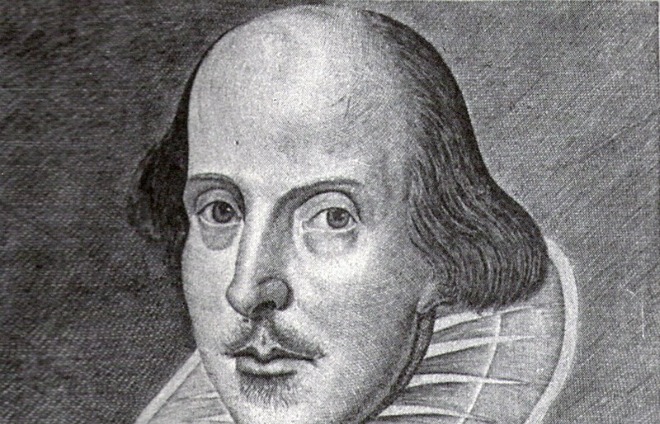
If Shakespeare is in heaven today, looking down at the damage he wrought—more than $800 million in crop damage every year, helping spread disease, even causing a fiery plane crash—would he still stand by that off-hand avian reference in Henry IV?
Of course, as brilliant as Shakespeare was, even he had no way to foresee the cascading series of events that would unfold from the moment he lifted his quill from the word “starling.” Nor, for that matter, could Eugene Schieffelin, a 19th-century drug manufacturer and Shakespeare fanatic, have properly understood the law of unintended consequences when he unveiled his master plan: Gather every bird referenced in Shakespeare’s plays and introduce them into the United States.
It was a crisp morning on March 6, 1890, when Schieffelin and his servants entered Central Park with cages holding a collection of loud, stocky black birds never before seen on North American soil. One by one, they opened the cages, and 60 starlings flew off into the wintry New York sky. Schieffelin repeated the stunt the following year with another 40 starlings, imported from Europe at great expense.
Schieffelin’s plan was conceived with the most benevolent of intentions: to pay homage to Shakespeare. Of course, the Bard was already wildly popular around the world at the time. “The sheer level of deification in the 19th century is incomparable,” says Stephen Marche, author of How Shakespeare Changed Everything. Shakespeare “was global popular culture at the time.”
“Apart from the beauty and fascination in watching them, birds offer an array of practical services, such as crop pollination, pest control, seed dispersal, and other key benefits. They’re not all as great as made out in Shakespeare, however—and the starling is a strong case in point!”
What transformed Schieffelin from a mere Shakespeare aficionado to an active fanatic, though, was his membership in the American Acclimatization Society, a New York City group founded with the purpose of importing European plants and animals to the United States. Bringing birds mentioned in Shakespeare’s plays to American soil was Schieffelin’s personal and public tribute to the Bard. Starlings made a brief appearance in Shakespeare’s work: Act 1, Scene 3 of Henry IV. “Nay, I’ll have a starling shall be taught to speak; Nothing but ‘Mortimer,’ and give it him,” Shakespeare wrote, a single line of script where a soldier is ordered, by the king, never to mention his brother-in-law’s name again, leading the soldier to dream of buying a starling that will repeat the name over and over. Starlings, after all, are incredible mimics, adept at copying everything from other bird songs to car alarms to human beings.
The idea that it could be problematic to introduce a new species into a foreign area was not widely understood at the time. In fact, Marche argued, the very notion was reviled. Victorians took great umbrage at the Darwinian concept that nature was cruel, finding it contrary to their religious sensibilities. The belief, therefore, that you could impact—much less hurt—a natural environment by releasing a new bird in it was ludicrous. Until the beginning of the 20th century, there was an Outback Steakhouse approach to ecology: No rules, just right.
A decade after Schieffelin’s ill-fated act, the federal government began taking steps to prevent the introduction of new species to the United States. In 1900, Congress passed the Lacey Act, which allowed the Secretary of the Interior to ban the importation of animals that could threaten people, industry, or the environment. Starlings were soon prohibited, but by then it was too late.
Initially, it seemed as though starlings would meet the same fate as other Shakespearean birds, including bullfinches and skylarks, which Schieffelin and his colleagues had imported: rapid death. Indeed, within a few years, just 32 of the original 100 starlings were still alive. However, starlings had several factors working in their favor. They’re not picky eaters, willing to feast on a wide array of insects and plants. They also roost almost anywhere, from tree holes to cliffs and burrows to building alcoves. These unique advantages allow them to easily live alongside humans, whether in cities, suburbs, or farms.
Before long, those hardy 32 birds began to spread rapidly. They took hold in New York City during the 1890s. Within a couple of decades, they’d reached the Mississippi River. Fifty years after gingerly emerging from Schieffelin’s cages, they could be found in every state. Today, starlings can be found everywhere from Alaska to Mexico.
Perhaps as impressive as their range is their population size. From just 32 starlings in the early 1890s, there are around 200 million birds in North America today. Ask any ecologist, farmer, or person interested in keeping plane engines intact, and they will tell you what an impact 200 million starlings can have.
Starlings are estimated to cause at least $800 million in crop damage in the United States every year, devastating everything from cherries to cattle feed.
Their destruction is particularly acute because they often congregate in massive flocks, known as murmurations, which can number in the hundreds of thousands. In 1960, an Eastern Air Lines flight departing from Boston struck one such murmuration seconds after takeoff, shorting the plane’s engines and sending it careening into Winthrop Bay. All but 10 of the 72 passengers were killed. A recent study found 852 instances of airlines striking either starlings or blackbirds were reported to the FAA between 1990 and 2001, causing both danger to passengers and more than a million dollars in damage.
Starlings also carry dozens of diseases that are deadly to both livestock and humans. They host tick-borne diseases, such as Borrelia, and have been linked to histoplasmosis and toxoplasmosis. Of particular concern is the possibility that they could cause widespread outbreaks by spreading foodborne diseases like Salmonella and E. coli from farm to farm.
Their impact is not limited to humans, either. Starlings often bully native birds out of their nests, which over time can lead to population decline. One researcher, after painstakingly observing 96 breeding pairs of Red-bellied Woodpeckers, counted starlings in half their nests by the end of the breeding season. The impact of their nest bullying is still unclear. While biologists have found that most species are still abundant after starlings move in to a new area, some species, such as sapsuckers, have declined in numbers.
This is not a trivial concern. “Apart from the beauty and fascination in watching them, birds offer an array of practical services, such as crop pollination, pest control, seed dispersal, and other key benefits,” says Gretchen Daily, a professor of biology at Stanford University. Still, Daily says, “They’re not all as great as made out in Shakespeare, however—and the starling is a strong case in point!”
For nearly as long as the starlings have proliferated, there have been communities launching campaigns to stop their spread. One hundred years ago, Marche noted, Hartford citizens tied scarecrow-esque teddy bears to trees and launched rockets at starlings’ nests. Unsurprisingly, the plan failed.
Subsequent efforts were similarly unsuccessful, though no less creative. In the 1930s, the federal government tried (and failed) to convince Americans to eat starlings, even proposing sample meat-pie recipes. Officials in Washington, D.C., have tried everything to drive out the birds, from fake owls to itching powder to electrified wire laid across parts of the Capitol building. (Starlings quickly figured out where they could safely perch.) Not even the White House was spared from the starling onslaught, with groundskeepers using speakers to blast out distress calls in an attempt to drive starlings to nearby trees that had been coated with an irritating chemical. Millions have been poisoned—and millions of dollars have been spent in the process—but to little avail.
Though Schieffelin couldn’t have known that he was unlatching Pandora’s Box that cold winter morning in Central Park more than a century ago, the ramifications of his well-intentioned—and incredibly ill-conceived—gesture to the Bard continue to this day. In a way, it’s a fitting tribute to the famous Macbeth line Shakespeare penned 400 years ago: “What’s done cannot be undone.”