

In the fall of 1976, Arline Geronimus began living in two separate, unequal worlds. At Princeton University, the political theory major became a research assistant to Charles Westoff, a professor who studied teen pregnancy among the urban poor. Down the road at Planned Parenthood in Trenton, N.J., she spent time with real-life, impoverished pregnant teens.
A self-assured, middle-class Jewish girl from Brookline, Mass., Geronimus shuttled between the extremes of haves and have-nots, eventually spotting a chasm between the theories of Princeton researchers and the experiences of the women she taught.
Geronimus would sit in on the professors’ meetings, listening to them discuss how young girls, ignorant of family planning, were ruining their lives with accidental pregnancies. Bearing children at an early age would rewrite these mothers’ life scripts, with terrible consequences. The funders behind the academic studies — including those in charge of Planned Parenthood’s own research arm — supported the consensus opinion that teen pregnancy was a crucial cause of ghetto poverty and ill health among America’s urban blacks. The only question was how to get these girls to stop having babies before they’d come of age.

The girls Geronimus met at Planned Parenthood’s alternative school for expectant teens, however, seemed to know exactly what they were doing. When she tried to teach them about contraception — something they supposedly knew nothing about — they laughed at her. The girls in the program told Geronimus they were overjoyed to have children. Far from blundering into motherhood, many were experienced with child rearing, having helped raise siblings or cousins. Some talked about how long they’d been trying to have a baby.
As the months wore on, the professors’ belief — that poor childhood health and ghetto joblessness would disappear, if only these girls would stop getting themselves pregnant — started to seem absurd. “What I was hearing in the halls of Princeton was inaccurate,” she remembers. “It just didn’t fit in, in any way, with what I was seeing.”
Though Geronimus didn’t understand the discrepancy, she noticed that these girls, even at 15 or 16, had been worn down by tough lives. Compared with her classmates in Princeton’s dorms — many of them hailing from America’s WASP elite — the poor black girls at the clinic seemed to lack the energy and health of youth. Geronimus couldn’t quite put her finger on it, except to say these girls seemed older — and not in a good way.
Somebody, Geronimus thought, had to put the facts together and change things for the better for these girls and others like them. In a fit of youthful arrogance, she took it upon herself to become that person. Now a professor at the University of Michigan, Geronimus has spent the last 30 years challenging the received wisdom of researchers about a pressing social question: Why are some racial minority groups less healthy than others?
A multitude of figures illustrate the stark health differences between African Americans and whites. Black residents of high-poverty areas, for instance, are as likely to die by the age of 45 as American whites are to die by 65. The disability rates of black 55-year-olds approach the rates of 75-year-old whites. Traditional theories, which blame the phenomenon on factors like genetics or income differences, fail to fully explain these huge disparities. Geronimus has devoted her career to finding the real reasons. Her own complex explanation for what’s happening — the weathering framework — rests on two unexpected, controversial causes: racism and stress, in the broadest senses of both terms. American minorities face a bevy of chronic obstacles that whites and the socioeconomically advantaged cope with far less often: environmental pollution, high crime, poor health care, overt racism, concentrated poverty. Over the course of a person’s life, the psychological and physiological response to this kind of stress leads to dire health problems, advanced aging and early death.
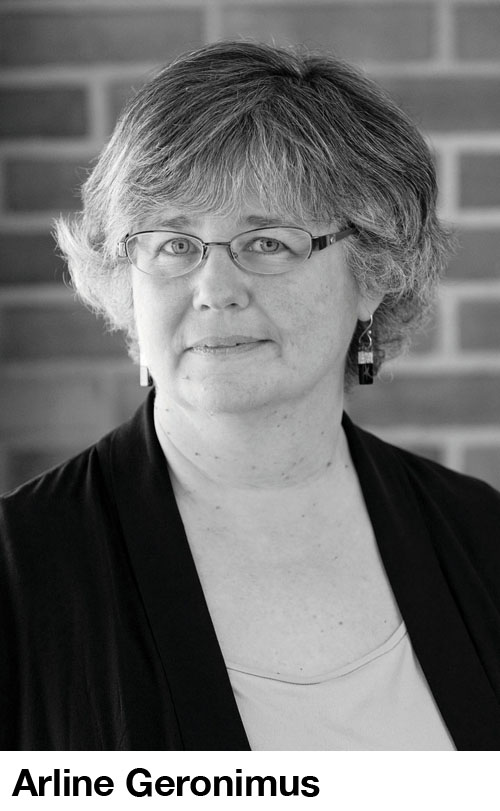
Geronimus’ papers, published in top-flight economics, medicine, sociology and public health journals, have attracted criticism from major foundations and led some colleagues to virtually blacklist her; early in her career, her findings even provoked death threats. Yet public health scholars are beginning to accept unconventional ideas from Geronimus and her allies about why blacks and other minorities generally aren’t as healthy as whites. As she’s gathered more evidence and refined her theory, Geronimus has become increasingly vocal about how weathering-inspired public policies might save and improve lives. Instead of brief interventions based on conjecture, she favors radical change in health care, welfare and other social policies based on thorough research and cultural understanding.
But Geronimus’ idea of structural economic and social change has never been an easy sell to the wider American public, to government officials or even to some of the liberal academics and activists one would think might be on her side.
• • • • • • • • • • • • • • •
The existence of health disparities between racial and ethnic groups is common knowledge among public health wonks. But the average American may find the numbers shocking: In impoverished urban areas like Harlem, one-third of black girls and two-thirds of boys who reach their 15th birthdays don’t reach their 65th. That’s almost triple the rate of early death among average Americans.
While the inner-city ghetto is an extreme case, a broad national trend ranges across a variety of health problems, from prostate cancer to hypertension. Since World War II, Americans’ health outcomes have generally improved. For minorities, though, progress has come slowly. Blacks now die at a rate comparable to the death rate for whites of 30 years ago. Every year, 100,000 more African Americans die than would be the case if black and white death rates were the same. For many diseases, the situation is worsening: In 1950, blacks had a slightly lower cancer death rate than whites. By 2000, the rate was 30 percent higher among blacks.
Experts have offered three approaches to closing the gap: behavioral (if we could only get them to eat better and exercise more), medical (if we could only give them better health care), and socioeconomic (if we could only get them better education and jobs). After a panoply of interventions, the numbers have barely budged.
For more this topic, see our story on unintended racism in schools on Miller-McCune.com.
Long before she’d heard the phrase “health disparities,” Geronimus was primed to view the issue through the prism of civil rights. As a young girl, she would visit the tiny Brooklyn apartment where her father and six siblings had grown up, listening to her grandmother’s harrowing tales of escape from brutal Russian pogroms. In high school, Geronimus, then managing editor of the student newspaper, thought the school’s black population didn’t have enough say in student affairs, so she created “Black Voices,” a column for African-American classmates. The other editors were furious. After college, during a Fulbright Scholarship to Sweden, she befriended Iranian refugees in her Swedish class and became involved in protests related to Iran. The Fulbright Commission asked her to stop. “I always somehow felt these compulsions or noticed these things and got in trouble over and over,” she says.
After an unsuccessful attempt at studying Sweden’s minuscule teenage pregnancy rate, Geronimus returned to Princeton as a research assistant and then served a short stint as an admissions officer. But the question of the Trenton girls nagged at her, so she went home to Massachusetts to attend the Harvard School of Public Health.
While she was learning to conduct empirical research, Geronimus mulled the puzzle: The girls understood family planning and birth control, and many were consciously making the decision to become pregnant. At the same time, then-current research showed that teenage pregnancy led to socioeconomic difficulties for the young mothers, along with pre-term birth, low-birth-weight babies and high infant mortality rates. To Geronimus, it didn’t make sense that the vast majority of a millions-strong population was having kids at the “wrong” time.
A professor recommended she read All Our Kin, anthropologist Carol Stack’s early ’70s ethnographic account of three years in a low-income black community. Inspired, Geronimus attacked the quandary the way Stack might have, guessing that something in their families or communities must have influenced the teens toward having babies early. She thought through the cultural differences between her life and theirs. If Geronimus had come home pregnant as a high schooler, her father would’ve thrown her out of the house. But most of the Trenton girls’ families embraced their expectant daughters. Geronimus’ grandmother, like many in her generation, had given birth as a teen, and nobody had criticized her.
The concept of teenage motherhood as a problem per se seemed to be a societal construct. Maybe, Geronimus thought, researchers were just viewing the minority community through cultural blinders.
Geronimus hypothesized that the black infants’ poor health wasn’t because their mothers were too young; it was due to their mothers’ social disadvantages. If she could take into account factors like income and race, she might show that teen mothers were no worse off than moms in their 20s. Unlike most studies, which separated mothers into the broad categories of teen and not-teen, Geronimus broke down maternal ages by year. The results among white women were expected: higher infant mortality rates among teen mothers. Yet the numbers for blacks astounded even Geronimus. Black teenage mothers had lower infant death rates than black mothers in their 20s. Because infant health is a decent predictor of maternal health, Geronimus’ data meant the average black woman might be less healthy at 25 than she was at 15. Perhaps the population of pregnant teens in Trenton was onto something. Consciously or not, the black teen mothers might be doing what was best for their infants’ health.
Geronimus’ advisers were enthralled, though a few faculty members were “pretty allergic” to her theories. But she was only a lowly grad student, so no one paid much attention. She taught at Harvard for a few years, then moved on to Michigan without event.
• • • • • • • • • • • • • • •
Geronimus was in the middle of a talk at the 1990 meeting of the American Association for the Advancement of Science when her 1-year-old daughter, overjoyed at recently having learned to walk, wandered toward the podium. Her husband pulled the girl away to the hallway, only to discover another panelist, Karen Pittman, surrounded by reporters and attacking his wife’s research. It seemed odd that this representative from the Children’s Defense Fund, one of the most prominent nonprofit organizations in America, was disparaging conclusions based on data Geronimus hadn’t yet circulated.
After 15 years, the people whose careers depended on the scientific status quo had finally taken notice of Geronimus’ work. They were angry.
Together with earlier studies, Geronimus was presenting new data showing that teen mothers’ socioeconomic outcomes were as good as or better than those of older moms. In many cases, pregnancy made the teens eligible for social programs like Medicaid, or they formed alliances with the families of the fathers of their children, improving their economic positions. Geronimus hoped to explain why these girls were making these choices and to show that efforts to prevent teen pregnancy wouldn’t solve anything. Her goal was to convince people to focus on larger underlying causes of poverty and poor health. After all, even the young mothers who were slightly better off still had it very rough.
Amid a climate of culture-war controversies over family planning and abortion rights, many didn’t hear the nuanced version of Geronimus’ work. It didn’t help that her conclusions undercut the mission of a major Children’s Defense Fund campaign against teen pregnancy, along with the work of prominent researchers nationwide.
“Her facts are misrepresentative, her premise is wrong and the policy implications of her arguments are perverse,” Pittman told The New York Times. Many news stories published in subsequent months were horrendously critical, with liberals painting Geronimus as racist and conservatives dismissing her as dangerous. One nationally syndicated columnist accused her of “prescribing pregnancy for poor teenage girls.”
Geronimus now blames the anger on a lack of empathy. “Most of us can take for granted that we could have healthy babies any time between 18 and 40. The concept that if you’re 25, you’re not going to have healthy kids? That just doesn’t compute,” she says.
Michigan’s public relations staff received more calls about Geronimus than any professor in the history of the press office. People sent letters to the university president demanding she be fired. Others called her at work and home, telling her she should be shot. One said there were people around the corner with Uzis, coming to kill her family.
“I found out the hard way just how controversial what I was saying was,” she says. “It was very sudden, and I wasn’t in any way prepared for it.”
Though the storm soon abated, clouds lingered for years. Michigan faculty members would tell students not to take her courses; some no longer wanted to collaborate with her on research projects. The National Institutes of Health, which funded much of her work, held a days-long forum on teen-childbearing research that left Geronimus feeling at times like she was being interrogated. Neighbors wouldn’t let their kids sit next to her daughter at Dairy Queen.
“There was always a sense that if I could just crack this intellectual nut and bring people together and come up with the right policy, then it would all be solved,” she says. “That was ridiculously naïve.”
• • • • • • • • • • • • • • •
Geronimus retreated to health research, which seemed safer territory. Scholars had criticized teens’ mothering skills, so she studied intelligence among the children of pairs of sisters. Geronimus showed that when a woman gave birth as a teen and her sister did so during her 20s, the younger mother’s children were no less intelligent than their cousins. She also examined antisocial behavior among children of teen mothers. They differed little from average American children.
Harsh criticism also drove Geronimus to concentrate on teaching, hoping to cultivate her brand of skepticism in a rising generation of scholars. As chair of the admissions committee at Michigan’s Department of Health Behavior and Health Education, she boosted the number of students from underrepresented racial and socioeconomic groups.
Slowly, she and the graduate students she advised built up evidence of accelerating, lifelong decline in health among minorities — first among mothers, then across a variety of illnesses and unhealthy behaviors like smoking. While it was well known that blacks are more likely than whites to be hypertensive, no one had looked at the age patterns of that risk. Geronimus found that black and white hypertension rates are virtually identical for people in their 20s, but the differences increase sharply during middle age. Similar patterns appeared in almost every health condition.
Those disparities don’t subside on the way up the income ladder. Geronimus and then-graduate student Cynthia Colen, now a professor at Ohio State University, led a study showing that upwardly mobile white women who grew up poor improved their birth outcomes, but similar income increases didn’t help black mothers much at all. Other researchers have established that the health of Latino immigrants declines as they stay in America longer and improve their lots in life, and that South Asian Indian mothers, who have socioeconomic profiles comparable to whites, suffer from birth outcomes as poor as those of low-income blacks.
As Geronimus built a theory to explain her findings, the work of her one-time colleague Sherman James, now at Duke University, was particularly influential. James described a phenomenon called “John Henryism,” named for the powerful black steel-driver of American folklore who dropped dead after winning a contest with a mechanical drill. James claimed that African Americans’ high levels of circulatory diseases were caused by exposure to psychosocial stressors, including chronic financial strain and subtly racist insults. He drew on research into high-effort coping, in which people exposed to long-term stress expend cognitive and emotional effort on those problems and then develop stress-induced health conditions.
The more results Geronimus produced, and the more she read, the more she began to agree with the radical notion that it wasn’t anything inherent to their race that made black people sick — it was being black in a racist society. The phrase “racism kills” would be a vast oversimplification of Geronimus’ ideas, but the way she describes it, racism is a fundamental cause of health disparities. The intolerance may be overt — several studies document high blood pressure and preterm labor among victims of discrimination. It might also be structural or societal, keeping even middle-class blacks in crime-ridden, environmentally poisonous neighborhoods.
Geronimus believes white Americans are too culturally removed from the minority experience to grasp the crisis. They take for granted that they’ll be healthy through middle age and essentially ignore those who aren’t so lucky. “We haven’t lived it, haven’t seen it close up. We have a different narrative … and we all grew up knowing that narrative, seeing everything through that prism. In all these different ways, different life experiences get marginalized and ignored,” she says. “That’s not for individual, conscious racist reasons, but because we have a highly segregated society and such entrenched inequality that dates back to when racism was in neon lights.”
• • • • • • • • • • • • • • •
In the early 1990s, Geronimus unified her ideas into a notion she calls weathering. At the time, scholars tended to view the course of life through developmental theory, which depicts humans as moving through stages of maturation, adulthood and senescence. Weathering takes the opposite approach: During a person’s life, Geronimus hypothesized, stressors ranging from pollution to racism-induced anger can weather the systems of the human body, fueling the progression of disease. The stressors accumulate and feed on each other, altering the culture and behavior of a community — leading, for instance, to earlier pregnancies or high smoking rates. Minorities suffer from weathering more often than whites because they’re more likely to experience socioeconomic and political exclusion. In the worst cases, as in the inner-city part of Trenton where Geronimus had worked, weathering accelerates the aging process at an alarming rate.
Geronimus’ early weathering papers generated a limited, though positive, response. For some researchers, the concepts jibed with their own conclusions and intuitions. “It’s such a compelling theory, many of us who work in this area almost take it for granted that it’s true,” says Chris Dunkel Schetter, director of UCLA’s health psychology program.
Weathering’s sociological slant was part of a broad move among public health experts toward social epidemiology, which analyzes communities and societies to understand disease. A throwback to the early 20th-century focus on person-to-person infection, the approach received a major boost from Clinton administration Surgeon General David Satcher, among others. Since then, Geronimus’ weathering framework, based on concepts that had once been attacked as dead wrong, has become part of the lingua franca of health research.
“She was willing to say things that people don’t want to hear,” says Marianne Hillemeier, who worked with Geronimus as a graduate student and is now a health policy professor at Pennsylvania State University. “It takes a toll on a person. It’s difficult to do that. But she did it, and she changed the field.”
Even Pittman, who now directs the Forum for Youth Investment and calls Geronimus’ thinking “backward,” notes that The National Campaign to Prevent Teen Pregnancy now concentrates on preventing unplanned pregnancies among adults.
It wasn’t a large logical jump from weathering to the idea that health disparities are a social justice issue. Geronimus returned to her politico-activist roots, authoring papers with titles like, “To Denigrate, Ignore, or Disrupt: Racial Inequality in Health and the Impact of a Policy-induced Breakdown of African American Communities.” She argues that doctors and academics should address the health disparities by fighting for structural economic and social change.
Nevertheless, even proponents of weathering fear it’s too early to adapt its tenets to policy. One risk is that it will be another in a succession of persuasive public health theories that, put into practice, produced either few effects or negative outcomes. “The best policy in this area is to put more money into investigations. We don’t know what we’re doing yet,” says Nigel Paneth, a professor of epidemiology and pediatrics at Michigan State University.
Other researchers offer a less charitable view of Geronimus’ approach. Two prominent economists, Jennifer Mellor and Jeffrey Milyo, have conducted a series of studies that call into question some of Geronimus’ basic assumptions, such as the links between race and income inequality with health outcomes. Several political conservatives accuse advocate-academics like Geronimus of pushing a leftist policy platform under the guise of dispassionate health recommendations.
“You can be a very careful and honest researcher,” says Dr. Sally Satel, a Yale psychiatry professor and co-author of The Health Disparities Myth. “You stay stuck with a politicized topic, then you tend to have an agenda.”
Geronimus, who calls herself a “die-hard empiricist,” says her political arguments are drawn from conclusions based on data —not vice versa. Expansive political essays, she believes, have more impact than data-focused papers that address only a slice of the problem. That Geronimus’ claims are both politically divisive and generally well-respected by researchers is testament to the strength of her analysis.
“You can’t just say, ‘Racism is why we have these disparities,'” says Brenda Henry, a program officer at the Robert Wood Johnson Foundation and a former Geronimus advisee. “If you decide to do what Arline does, you better damn well make sure you can back up your science.”
• • • • • • • • • • • • • • •
On a wintry Friday afternoon, Geronimus sits in her office, describing the nascent project funded by the National Institutes of Health that might provide the first hard evidence of the biology underlying weathering.
With purple-rimmed glasses and frizzy, graying hair, she looks like an average Midwestern PTA mom. When she speaks, in a sing-song voice tinged with a North Woods accent, her arguments seem ordinary and straightforward, until you realize her conclusions lead to nothing short of social revolution. The only obvious clues to her activist alter ego are the dozen or so photos and posters taped to the walls and doors, images of Muhammad Ali boxing in one corner, Che Guevara wearing a Bart Simpson T-shirt in the other.
For all its descriptive power and intuitive reasonableness, the weathering framework has a significant weakness: It was created as a metaphor for social and cultural disadvantage. To be sure, minorities deal with chronic stressors, and they often get sick. But until recently, Geronimus couldn’t explain how stress leads to illness.
Academics have studied the issue for years, though rarely with a focus on race. The most prominent is Rockefeller University’s Bruce McEwen, who during the 1990s devised a concept known as “allostatic load,” which measures the levels of hormones —including cortisol and 15 other chemicals — the body creates in response to stress. Several studies have shown correlations between allostatic load and illness, and Geronimus has long been aware of them. Yet she once felt a biological explanation of weathering would be too reductionist.
Her opinion changed as she watched her two sons, monozygotic twins, grow up. Most people would call them “identical twins,” but Geronimus doesn’t. Despite sharing the same genomes and looks, from infancy the boys had completely different personalities. In the mornings, one would wake up happy, the other in a foul mood. In adolescence, one had his growth spurt well before his brother. As she saw nature and nurture interact within her children, Geronimus thought about how biology and environment intermingle at the cellular level in ways scholars don’t understand. She began to think of allostatic load as a mechanism to explain the black box she called weathering, converting the stressors of the social world into physiological disease.
In stressful situations, the body activates hormones that help us, for example, think efficiently or improve memorization. When the threat or challenge recedes, the stress system shuts down production. But during periods of acute or near-constant stress, the body undergoes hormone overexposure, and with time, a high allostatic load causes wear and tear leading to cardiovascular disease, diabetes and accelerated aging. McEwen now calls allostatic load the “biological conceptualization” of the weathering framework. As Geronimus describes it, the results among African Americans are disease and death, the physiological manifestations of social inequality.
Geronimus knew if she could show the biology of allostatic load and the social conditions of weathering in action, she’d silence many critics. So she and Jay Pearson, a research fellow at Michigan, led the creation of a first-of-its-kind study of both phenomena in the same group of people. The data will come from Detroit, where the University of Michigan already partners with community organizations and health agencies to gather information.
With the help of researchers at the University of California, San Francisco, Geronimus and Pearson’s team will use blood samples taken from participants to measure allostatic load, comparing it to information they collect on psychosocial and environmental stressors, as well as disease rates. They’ll also look at telomeres, the repetitive DNA structures that cap the ends of cell chromosomes. Telomeres shorten when cells divide, so they’re known as a “mitotic clock” that may provide a better measure of age than the number of years a person has been alive. A few small studies have shown that socioeconomic stressors may induce telomere shortening. Geronimus hopes to track racial discrimination and stress as they get underneath the skin, producing hormonal responses and accelerating cellular aging. She expects the new experiment to show that many blacks are, biologically speaking, older than whites of the same chronological age.
• • • • • • • • • • • • • • •
The government has long been aware of racial health disparities. In 1984, the Department of Health and Human Services established a Task Force on Black and Minority Health, and in 2000, its once-per-decade Healthy People plan was refocused to concentrate on the subject. That same year, Congress elevated the National Institutes of Health Office of Minority Health, making it into the higher-profile National Center on Minority Health and Health Disparities.
Yet no major legislation on the problem was signed under George W. Bush. Now, data show the vast majority of health disparity measures are stagnant, with many getting worse. “Whatever is being done is the wrong thing,” Geronimus says.
While traditional interventions, like increased heart disease screening for black males, are often helpful, they barely impact overall outcomes. A weathering-inspired public policy, on the other hand, would aim to address the stressors that boost allostatic load — though not in the way one might think. Geronimus’ plan isn’t about managing stress on an individual level: Sending armies of yogis and therapists to America’s ghettos wouldn’t address the larger crisis. Simplistic paeans to racial harmony won’t work, either. The issues are too systemic.
Geronimus doesn’t offer an all-encompassing solution, just a better method for creating policies that might produce results. One potential idea might address some unintended consequences of Clinton-era welfare reform. By most accounts, the policy was a roaring success, with hundreds of thousands of African Americans leaving the dole for full-time work, or trading up for higher-paying jobs. The changes even reduced poverty rates in many urban areas.
While black women shared the income benefits of economic expansion, though, their health, on average, declined. Geronimus says stress and changed behavior are the best explanation: Black women took jobs that required hours-long bus rides to reach far-away employers, leading to sleep deprivation and little time for medical visits. Others worked the night shift, a practice the World Health Organization recently linked to increased cancer risk. Many faced difficulties finding and paying for child care for their kids. Despite working hard and playing by the rules, stress levels for many shot up. Because of the social interdependence within impoverished African-American communities, it may have set in motion problems for friends and family members.
“It wasn’t on the policy radar screen to think about these health issues,” Geronimus says. “Is it a big surprise that in stress-related diseases you’d see their lives got worse? Probably not.”
More enlightened policymakers might also have predicted that tearing down public housing and relocating residents — a common practice in many cities from the 1990s through the present — would disrupt the social networks and community support that deflect the stress of weathering.
With a better understanding of minority cultures, even small policy changes might make a difference. For example, many health-promotion programs are aimed at teens who smoke, but in some minority communities, people take up tobacco in their 20s. The same can be said for prenatal risk screening, which currently sees 20-something women (no matter their race) as low-risk, when, in fact, blacks in that age demographic face greater health dangers than teenagers.
Beyond specific policy initiatives that might cut down on weathering, Geronimus has a broader aim. She wants to reconstruct beliefs — especially the assumptions of white suburbanites who, without thinking about it, often view inner-city minorities as lazy and to blame for their problems, instead of as victims of a system that renders them disabled before they’re teenagers. Geronimus doesn’t dismiss the idea that many poor people, blacks and inner-city residents make stupid decisions and do bad things. She just thinks policies are aimed at the bad actors far too often, with unintended, negative consequences. “I keep hoping that if the picture were made clear to a broad group in its full form, not just as in this empirical outcome or that outcome, it would start building interaction, understanding and empathy,” Geronimus says. “It doesn’t mean we’ll all be sitting around singing ‘Kumbaya.'”
On her most optimistic days, Geronimus believes she’s living in the right historical moment for such a radical rethinking. A race-conscious black president from the South Side of Chicago has taken office, comparatively colorblind young adults are flocking to cities, a green revolution is itching to happen, and an economic crisis has the country clamoring for change. To meet that call, she and collaborator J. Phillip Thompson, a politics and urban planning professor at the Massachusetts Institute of Technology, are shopping a book proposal outlining a plan for suburban whites and urban minorities to participate in the green transformation of American cities, with an eye toward economic revival and the defeat of stereotypes.
For now, though, President Obama’s health care and civil rights agendas describe vague plans to address health disparities, largely through the types of interventions that have failed in the past. (The White House did not respond to questions on Geronimus’ research and conclusions.) And sometimes, when she’s holed up in her book-filled office in the latte town of Ann Arbor, it’s easy for Geronimus to forget why she’s devoted her life to a grand effort that has created few signs of progress. She often doubts her work will lead to real change. If she were a betting woman, she’d bet against that prospect. Some days, she asks herself why she’s even doing the research at all, and lets her thoughts drift toward retirement.
But when she visits her community research partners in Detroit, the humbling, heartrending American city that’s become a sort of urban reservation for black Americans, she chats with the people who show up as numbers in her data sets. She listens to them talk of their struggles to find meaning in life or just to make it through the day. Compared to what they’re dealing with, the cushy existence of reading journals and running statistical analyses seems like nothing.
Visiting Detroit reminds her of the girls she knew in Trenton, back when she was younger and less jaded, when she had more faith that she could make a difference. “There’s just no way to think about doing anything else once I’m there and seeing real people,” Geronimus says. “It feels like something has to get done. You know, something.”
“Like” Miller-McCune on Facebook.
Follow Miller-McCune on Twitter.
Add Miller-McCune.com news to your site.