
Pacific Standard March-April 2013 Cover

The Nap Zapper

Nap Zapper

As American workers began migrating from fields and factories to offices in the 1920s, forward-thinking inventors got busy devising ways to squeeze more productivity out of deskbound drudges. In this March 1923 issue of Science and Invention magazine, editor Hugo Gernsback—namesake of the prestigious Hugo Awards for science fiction—proposed a way to get rid of rest altogether: the electrical sleep eliminator. Gernsback believed that sleep was little more than a habit picked up by ancient humans in reaction to the cycle of the sun’s rising and setting, one that was no longer ... Read More

How Wine Tasting is More — and Less — of a Scam Than You Thought

(PHOTO: JOHN BURGESS/THE PRESS DEMOCRAT)

How do we decide what makes one wine better than another? Expectation-influencing variables like a label and price make a big difference—just as they do for other "experiential goods" like food or hotels. With wine, however, blind taste tests by experts are supposed to eliminate those external cues. But it turns out the experts may be no more reliable than the rest of us. In these data points, drawn from his new book, Mind Over Mind: The Surprising Power of Expectations, journalist Chris Berdik takes a sobering look at our double vision. This annotated photo originally appeared in the ... Read More

The Formula

(ILLUSTRATION: MARK MCGINNIS)

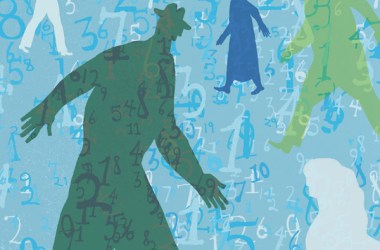
On the evening of August 18, 2011, viewers of The Daily Show were treated to a droll but distressing lesson in statistics. “The United States is not a Third World country by any measure,” Jon Stewart told his audience, “except, perhaps, income inequality.” To Stewart’s left, a ranked list of countries flashed on the screen, topped by Sweden. Then, in a blur, the list scrolled down to its middle-bottom reaches. “We rank worse than the Ivory Coast, worse than Cameroon: 64th!” After a few moments trash-talking the nations just below us on the list (“In your face, Uruguay, ... Read More

The Big One

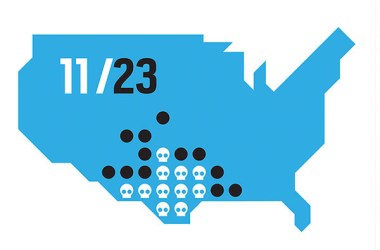
Big One graphic from January/February 2013 Pacific Standard

... Read More

Fifty-Fifty: Whether to Test for Huntington’s Disease

(ILLUSTRATION: DANIEL STOLLE)

Listen to Life in the Data, Episode 1, featuring Mona Gable: UNTIL HE DIED in 2010, my brother was often mistaken for being drunk. There were the frequent car accidents, the flashes of anger, the cloudy thinking, and especially Jim’s wild body movements and slurred speech. People would stare after him as he lurched and wove down the sidewalk. We thought his illness was the result of a snowboarding head injury. When I’d press Jim about his health, he would deflect my questions. “I’m better,” he insisted. Then Jim was dying. As I sat in the pale winter light of a hospital ... Read More

Air Boomtown

(PHOTO: RENAE MITCHELL)

At the end of this summer, as I’ve done most summers for the past 25 years, I copiloted a small plane and landed at Sloulin Field International Airport in Williston, North Dakota. Sloulin Field is hunkered not far from the arid, windswept eastern border of Montana, and about 60 miles south of the Canadian border. It’s the first opportunity to clear U.S. customs following my annual family fishing trip to northern Saskatchewan. The previous summer, only the wind and the lilting song of meadowlarks disturbed the little airport’s tranquility. This year, Williston’s tarmac reverberated with ... Read More

Whose Body Is This?

(PHOTO: BRENDAN BORRELL)

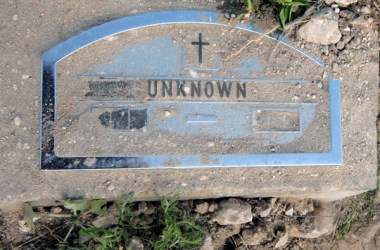
At the bottom of a freshly opened grave, two young women use brushes and dustpans to sweep the last traces of powdery south Texas soil off the coffin. It’s a little before 8 a.m. on a cloudless May morning, and the punishing sun will soon push the temperature into the 90s. Up on ground level, the excavation’s super​visor, a sprightly forensic archaeologist named Lori Baker, snaps photos of the work. All around them, granite headstones display the names of the dead buried here in the city of Del Rio’s Westlawn Cemetery—Connor, Pennington, Ramirez. Baker has come here from Baylor ... Read More

The Caucasian King Of K-Pop

Brad Moore (center) with his bandmates, Kim Hyung-Tae (left) and Jang Beom-Jun (PHOTO: GETTY IMAGES)

He was exhausted, his makeup itched, and his tight white pants were cutting off the circulation in his legs. Still, Brad Moore smiled and waved from the television-studio stage to the crowd of screaming, clapping Korean teenagers. Mainly, the 28-year-old drummer from Ohio was relieved that his eight weeks on a Korean music reality show were almost over. The fact that his band, Busker Busker, was poised to become a pop sensation didn’t hurt, either. Moore and his bandmates—guitarist and vocalist Jang Beom-Jun and bassist Kim Hyung-Tae, two young Koreans he’d met while teaching English ... Read More

Why We Do What We Do

Sara Miller McCune

FOR MORE YEARS than I care to count, I have been reading and publishing academic articles about the latest research in political science, education, sociology, and psychology. Together with economics, these areas of study—the social sciences—make up the empirical backbone of American public life. From James S. Coleman’s research proving that “separate but equal” schools were anything but equal, to James Q. Wilson and George L. Kelling’s “broken windows” theory of policing, to Robert D. Putnam’s bracing look at the decline of civic engagement and social connections in his 2000 ... Read More

It’s 10 P.M. Do You Know What Your Avatar Is Doing?

(ILLUSTRATION: RAYGUN STUDIO)

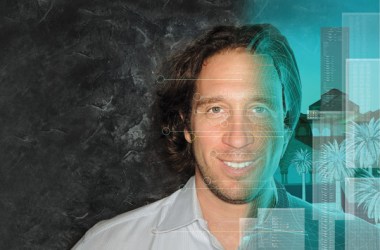
IN THE 1982 SCIENCE-FICTION NOVEL Software, an elderly character named Cobb Anderson trades in his frail human body for an android avatar and then sets out on an unusual mission: to start a cult. The old man’s new body allows him to alter his appearance at will, which turns out to be handy for gathering disciples. To gain trust and devotion, Anderson meets with his initiates one at a time—and then changes his face to resemble theirs. “I always use this trick on the recruits,” he says with a chuckle. A few years ago, a research psychologist at Stanford University named Jeremy ... Read More