

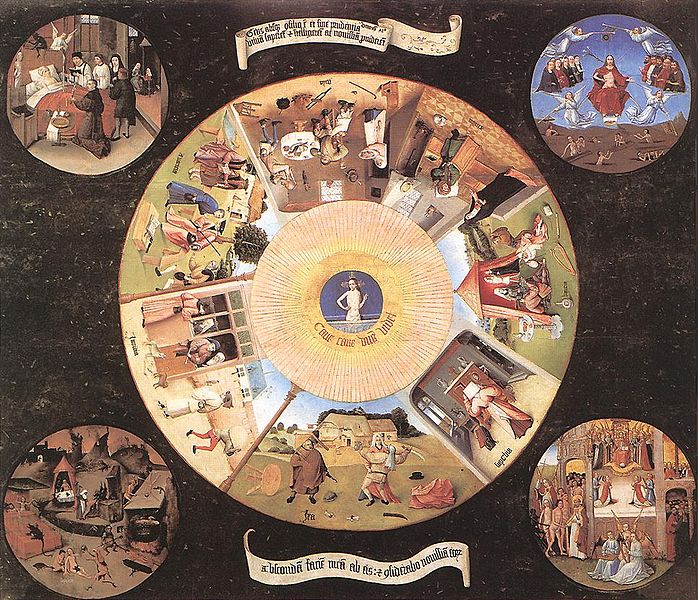
Lust

Good news for those in the bedroom: Researchers at the University of Washington have electrically spun dissolvable cloth with nanometer-sized fibers that can release drugs to prevent pregnancy and sexually transmitted diseases. The Bill & Melinda Gates Foundation has given $1 million to advance this work, which aims to significantly help in combating the transmission of HIV.
Gluttony

Like a nice slab of mozzarella? Maybe your ancestors did, too. Archaeologists have discovered evidence that people in Europe have been making cheese for the last 7,500 years- the first and only sign of Neolithic cheese-making.
Greed

In a study at the University of Hong Kong, students were asked how much they would pay to either enjoy positive emotions for an hour or to avoid negative emotions for an hour. British students agreed to pay £43 to avoid disgust and £95 for an hour of love, while Hong Kong students were more likely to pay to avoid regret, embarrassment and frustration. How much would you pay to feel like you have it all?
Sloth

Ludwick Maishane, a university student from Mozambique’s province of Limpopo, was named the 2011 Global Student of the year after he developed DryBath, a water-less bathing lotion. While the idea came when Maishane wanted to postpone his own bathing, the product may have a much more virtuous future: it could be a huge boon for the 2.5 billion people across the world without readily available water and sanitation.
Wrath

Professors question whether staying angry is a bad thing. Jim McNulty, a psychology professor at Florida State University, conducted a study where he found that a partner in a marriage that has been forgiven for some kind of trespass is 6.5 times likely to do something wrong again. Professor Sean Horan believes forgiveness fights off an evolutionary defense- leaving those that hurt us.
Envy

Recent graduates are likely to be highly envious of those who have graduated before them. This infographic by The Week highlights cringe inducing factoids, such as the total outstanding U.S student loan debt ($867 billion) and the current annual cost of a private education ($31,395).
Pride

Watching others do what we do takes less energy and is easier for our brains to process, states researcher Rick van Baaren. It increases our “sensorimotor fluency,” meaning that mimicry is not only the greatest flattering but a good way to give your brain a rest.