
Pacific Standard May-June 2013 Cover

About Jeffrey Wasserstrom

Jeffrey Wasserstrom is a professor of history at the University of California, Irvine, and the co-editor of Chinese Characters: Profiles of Fast-Changing Lives in a Fast-Changing Land, coming out in September from UC Press. His commentaries and reviews have appeared in a wide range of academic journals, as well as in general interest periodicals such as Time and Newsweek.

The Dictator’s Learning Curve: David and Goliath Tales for Our Times

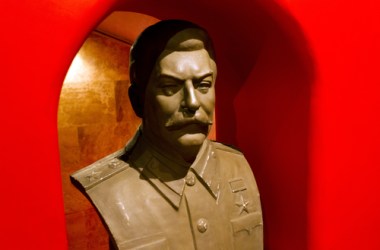
Bust of dictator Stalin

How have struggles between authoritarian governments and their challengers changed since the Cold War? And why do moves toward democratization proceed smoothly in some settings but stall out or get reversed in others? These are the kinds of questions that veteran journalist William J. Dobson, an editor at Slate, sets out to answer in The Dictator’s Learning Curve, his intelligent and informative first book. They are certainly timely ones. Events such as Arab Spring led TIME Magazine to dub 2011 the “Year of the Protester”; headlines from a few months ago told of a loosening of ... Read More

OWS, Egypt Expose Limits of Town Square Test

Many of last year’s most dramatic photographs showed people packing public places to sound off. We saw memorable images of crowds gathering at Tahrir Square to lambast one government then castigate its successor, protesters at Zuccotti Park to voice outrage at Wall Street, and public outcry on the grounds of the Mazu Temple in the South China village of Wukan in December to denounce government land grabs. We saw gatherings in Syria, in Tunisia, in Greece, even in North Korea. If, as TIME magazine declares, 2011’s Person of the Year was “The Protester,” then 2011’s Place of the ... Read More

When Memes Collide: Tank Man, Pepper Spray Cop

Thanks to quick-thinking protesters and bystanders carrying cellphone cameras, Web surfers around the world quickly learned the story of what happened at UC Davis on November 18. The event began with students concerned about local issues (university budget cuts and tuition hikes) and a national struggle (Occupy Wall Street) staging a sit-down protest. When they refused to budge, the day’s most dramatic moments came, as campus police wielding canisters of pepper spray gassed the unarmed youths, then removed them from the area. Still and moving images of this confrontation appeared online ... Read More

Whose Road Led to Hu’s China?

What kinds of historical echoes sound loudest in today's China? And which past leaders deserve the most credit — and blame — for setting the country on its current trajectory? These are timely questions as the Chinese Communist Party gears up to celebrate its 90th birthday on July 1. For in China, as elsewhere, milestone moments are fitting times for backward glances and often accompanied by symbolic gestures that invite scrutiny. One thing is obvious: Mao Zedong (1893-1976), though long gone, has hardly been forgotten in the West or East. Nor should he be, in light of the indelible ... Read More

Predicting How China Will React To Protests

Could China experience a Jasmine Revolution of the sort that has brought change to Egypt and Tunisia — or does its booming economy make this very unlikely? Why have the Chinese authorities been so spooked by Internet calls in dozens of cities for "strolls" of protest — even though few people have turned out for them? What has made Beijing, which has tolerated some demonstrations in recent years, show zero tolerance toward the current "shadow revolution" that so far has not generated a single mass gathering? I was asked questions like these a lot during a recent nine-day trip that took ... Read More

Media and Revolution 2.0: Tiananmen to Tahrir

Have the latest advances in communication technology radically altered the fundamental dynamics of struggles for change in authoritarian settings? Or have cell phones and social media merely brought about small shifts in the dynamics of revolution? Is the Web a godsend to those trapped in oppressive states, as Nobel Laureate Liu Xiaobo suggests in his essay “The Internet is God’s Gift to China”? Or does this thinking give in to a form of “cyber-utopianism” that glosses over the potential of new media to be used by autocrats, their propaganda ministries and security forces to massage ... Read More

Throwing the Book at China

"Sweetie, are you having nightmares about the Chinese again?" — Cartman's mother to her son, in an October 2008 episode of South Park that begins with Cartman frightened by a dream featuring the drummers from the opening ceremony of the Beijing Olympics. A funny thing happened on the way to the close of the 21st century's first decade. We started to hear less and less about the "post-Cold War era" from brand-name columnists, high-profile pundits and Foreign Affairs contributors (hardly mutually exclusive groups, of course), and more and more about a new period taking shape. There isn't ... Read More

Three Ways of Looking at the PRC’s Latest Campaigns

"One can imagine Chiang Kai-shek's ghost wandering around China today nodding in approval, while Mao's ghost follows behind him, moaning at the destruction of his vision." — Rana Mitter, Modern China, Oxford University Press, 2008 "The communist leaders of the world's most populous nation are taking lessons from the small city state of Singapore. ..." Asahi Shimbun, China's Top Officials Study at Singapore's Knee," June 2010 For someone who's been dead almost 35 years, Mao Zedong (1893-1976) has been getting a lot of attention lately. In 2005, Jung Chang and Jon Halliday's Mao: The ... Read More