


Pacific Standard May-June 2013 Cover

Corridors of the Mind

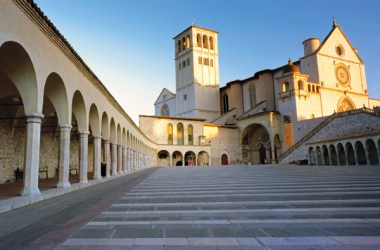
Basilica of San Francesco d'Assisi

ARCHITECTS HAVE BEEN talking for years about “biophilic” design, “evidence based” design, design informed by the work of psychologists. But last May, at the profession’s annual convention, John Zeisel and fellow panelists were trying to explain neuroscience to a packed ballroom. The late-afternoon session pushed well past the end of the day; questions just kept coming. It was a scene, Zeisel marveled—all this interest in neuroscience—that would not have taken place just a few years earlier. Zeisel is a sociologist and architect who has researched the design of facilities ... Read More

Why Patients Leave Hospitals With a Bad Taste In Their Mouths

(PHOTO: PRYZMAT/SHUTTERSTOCK)

Disrespect, Lucian Leape believes, is the elephant in the hospital. According to the adjunct professor of health policy at the Harvard School of Public Health, disrespect is the reason why so many patients leave the E.R. feeling belittled or ignored. It's why medical workers feel so "demoralized." And it's why—despite attempts at change in the last decade—we still see medical errors that cause needless suffering and even cost lives. Thirteen years ago, the Institute of Medicine released a groundbreaking report titled "To Err is Human" that called for a new paradigm in the medical ... Read More

Rejecting Term Limits for the Supreme Court

Today’s U.S. Supreme Court justices, critics cry, are serving longer than ever (darned improved life expectancy!). And because these people just won’t go away, the court risks becoming an institution where ideological swings have long-lasting impact (or damage), and where present decisions are made by justices grounded in the past. So legal scholars and amateur court watchers are at it again, agitating for the end of life terms on the nation’s highest court. One oft-quoted and particularly alarming statistic, from Northwestern’s Steven Calabresi and James Lindgren, shows that ... Read More

Can We Make College Cheaper?

Number of Years with a Percentage Price Increase Exceeding the Inflation Rate

Critics of American higher education have a set of theories to explain the ever-rising cost of college tuition. Schools are inefficient. They blow too much money on administrators, not enough on academics. The academics they do have spend their time on research, not students. And those students live in an increasingly plush world created by the arms race for prestige rankings: Best medium-sized college in the Midwest! Most wired campus in the country! Top-rated college for would-be aerospace engineers! “These people are going to say, ‘Ah! Colleges, they’ve turned themselves into ... Read More

Not Twitter Revolutions, But Twitter-Assisted Revolutions

It’s tempting to think of the Internet as the world’s best weapon against authoritarianism. Where it goes, democracy will follow, if we can just figure out how to strategically drop enough thumb drives, cell phones, and “shadow” technology. But, of course, the relationship between the Internet and democracy is much messier. And what we are now beginning to understand about it – with scientific rigor, that is – suggests that the laws governing this latest technology are not so different from its predecessors like radio and TV. “The Internet can play a role and facilitate ... Read More

Is It Worth Paying People to Be Healthy?

The Supreme Court spent a significant share of last week’s oral arguments on the Affordable Care Act debating the role of money in public health. Can the government rightly fine people for not buying health-care coverage? And what happens if such rebels face no penalty? Would we all, as a result, wind up less healthy? This line of thinking — the fine as a stick used to punish people who won’t get health care — isn’t the only potential contribution of money on public well being. Health researchers and behavioral economists are increasingly pondering the reverse: cash as carrot. ... Read More

‘Stand Your Ground’ Stats Point to High Costs

“Stand your ground” laws, such as the one prominently cited in Florida’s Trayvon Martin shooting last month, are on the books in 28 states. These laws represent a kind of gamble, that by shifting the justice system in favor of the shooter, society will aid people who have acted in self-defense more than it will enable those who might exploit the concept. By claiming Stand Your Ground status, a shooter (or stabber) never enters a courtroom to defend their actions unless police cite probable cause to believe the homicide or assault with a deadly weapon was, in fact, ... Read More

WikiLeaks Has Not Ushered in New Era of Transparency

Many breathless things have been written and said about WikiLeaks since the organization first released that startling video in 2010 of an Army helicopter over Baghdad firing on civilians. The site went on to drop hundreds of thousands of American diplomatic and defense documents that year. Amid all that raw data, WikiLeaks’ supporters and media theorists on multiple continents suggested we were now entering a new era of transparency — one in which secrecy might be dead. “All of this,” concludes legal scholar Alasdair Roberts in a new paper, “is vastly overwrought.” Roberts, ... Read More

Talmud, Internet Unlock James Madison

James Madison’s Notes of the Debates in the Federal Convention of 1787 has never been a bestseller. Benjamin Wittes, a senior fellow at the Brookings Institution, randomly flips open his own copy of a published edition to page 129 and starts reading aloud to illustrate why. “Mr. Randolph's plan,” Madison wrote, “as reported from the Committee June 13 being before the house, the 1. propos: ‘that a Natl. Govt. ought to be established consisting &c.’ being taken up.” For one, this stuff doesn’t translate out loud very well. The book continues like this for some 600 ... Read More

Accepting Climate Change an Economic Luxury

Environmentalists, scientists, and pollsters have devoted a lot of ink and energy over the last few years assessing a curious trend in perceptions about climate change. Several years ago, the American public appeared to start rejecting the idea of climate change: poll after poll showed concern over the problem tailing off and suspicion of the science behind it rising. What was going on here? Did opinion on climate reflect the partisan politics of the moment? Were people swayed by the weather outside, perhaps by that rash of crazy snowstorms in the winter of 2009-10? Were the dipping poll ... Read More